
Auction Detail
Error message
The answer you entered for the CAPTCHA was not correct.The Yasushi Tejima Collection Japan Dragon Stamps Part 1


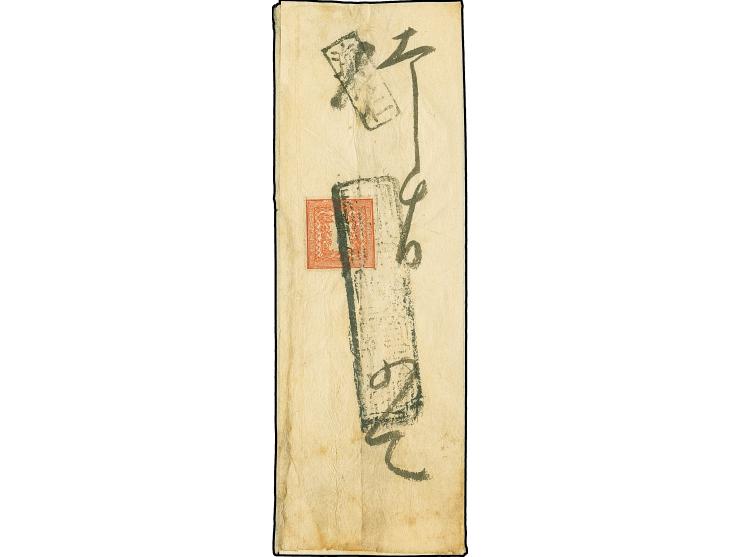
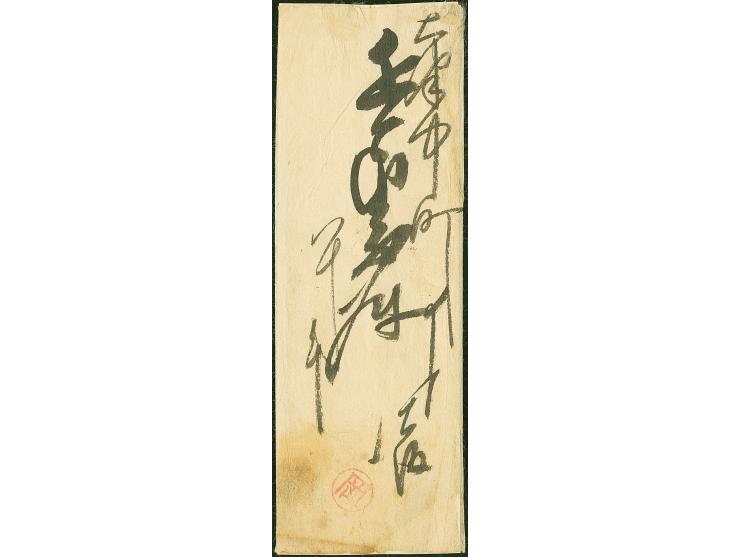
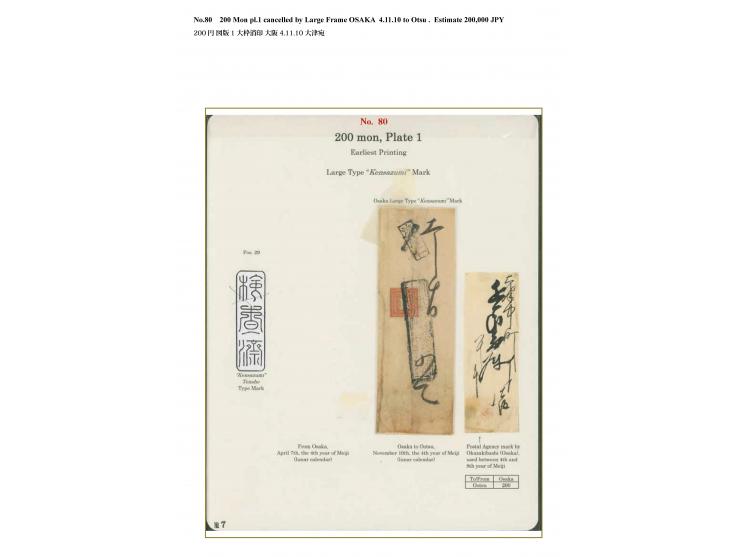
1871, 200 mon vermilion, earliest printing, plate I, position 1, tied by large "Osaka Kensazumi" to the reverse of a cover to Otsu.
Manuscript dateline "11th month 10th day", or Meiji 4.11.10 (21 December 1871). On the address side at foot, vermilion circular framed hakoba-in "Oka" (岡) of Okazakibashi letter box.
A fine and attractive cover, notable for the earliest printing of the 200 mon and the scarce Okazakibashi letter box marking.
Rate: 200 mon basic weight, separate area rate of the first rate period.
Reference: Illustrated in Dragon Covers, p. 7.


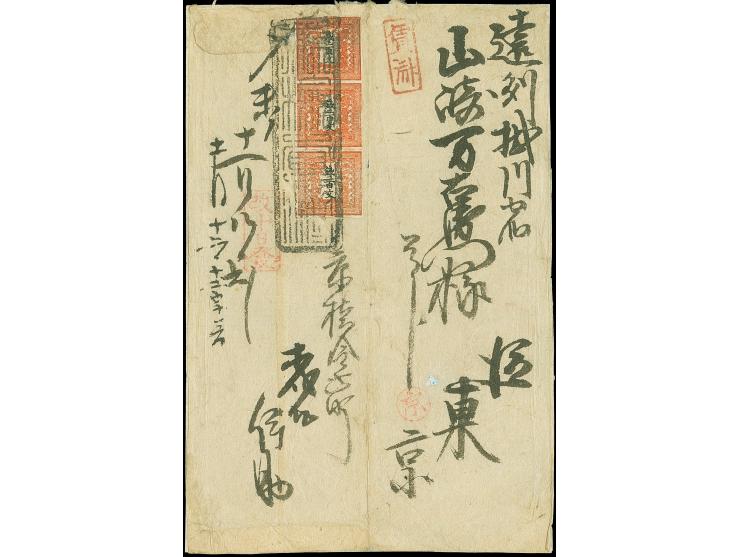
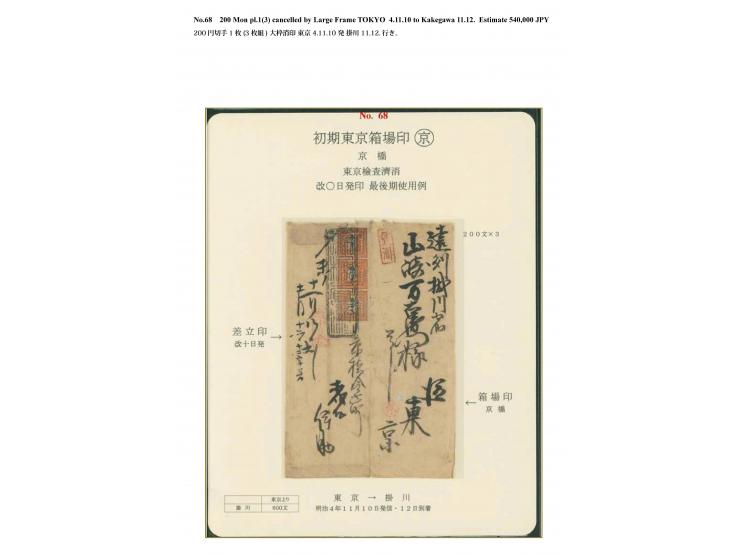
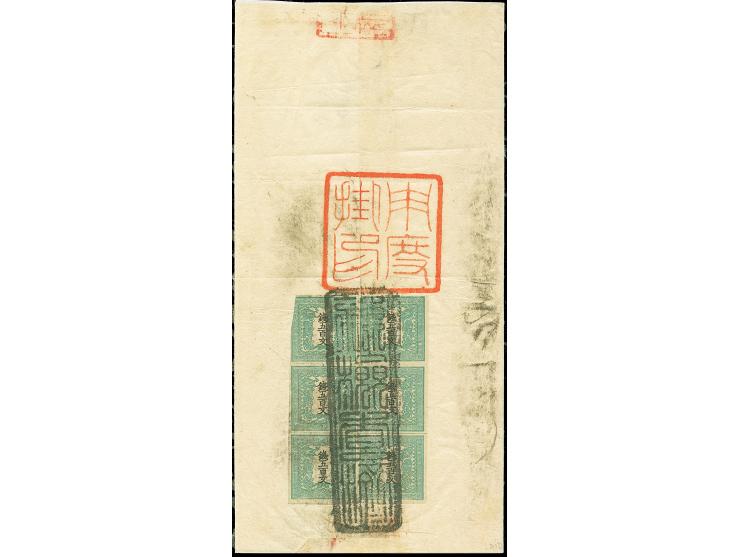
1871, 200 mon vermilion, plate I, a vertical strip of three, positions 5-13-21, partly oxidised, with two positions showing luped margin at right, tied by large "Tokyo Kensazumi" to the reverse of a cover to Kakegawa, Totomi Province.
Manuscript datelines "11th month 10th day sent" and "11th month 12th day received" of Meiji 4 (22 and 24 December 1871). Also showing the red circular framed hakoba-in "kyo" (京) of Kyobashi, a letter box mark used only during Meiji 4, together with framed vermilion "adjusted 10th day dispatched", the latest known usage of this marking.
A highly attractive first-period cover, made especially desirable by the rare Kyobashi letter box mark and the late usage of the Tokyo dispatch datestamp.
Rate: 600 mon basic weight cover, Tokyo to Kakegawa, separate area rate of the first rate period.
Reference: Illustrated in Dragon Covers, p. 133.


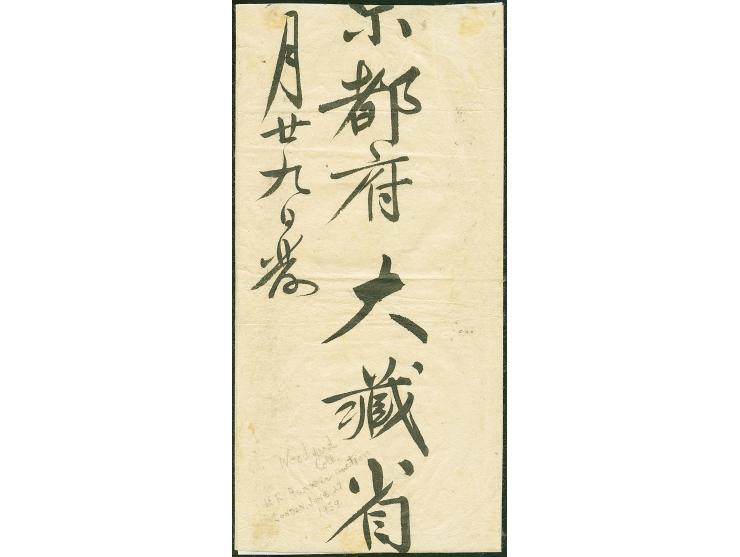
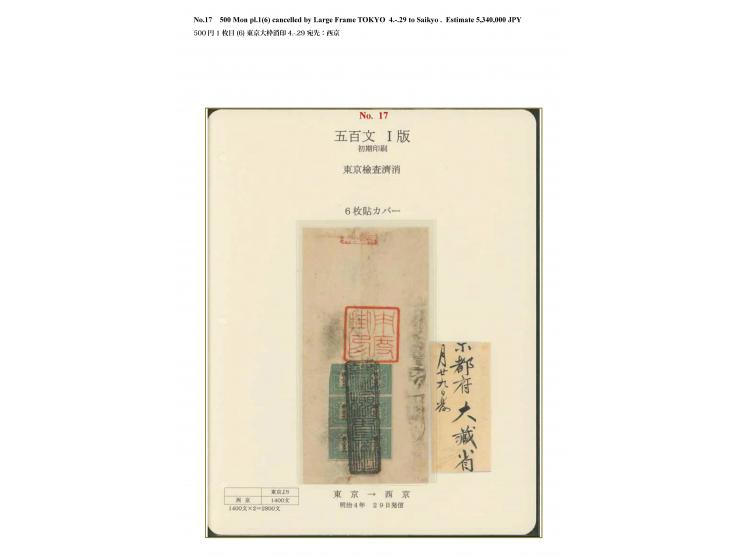
1871, 500 mon bluish green, early printing, a block of six, plate I, positions 3/4-11/12-19/20, position 3 cut into at upper left, tied by large "Tokyo Kensazumi" to the reverse of a cover, address side incomplete, from the Ministry of Finance to Kyoto.
Manuscript dateline on front side, month 29th day. Positions 3 and 20 with official pinholes at upper right for sheet stacking.
A celebrated and highly important classic Dragon cover, long associated with the name of Tracy M. Woodward. The impressive block of six, together with its official origin and distinguished provenance, places this among the iconic large-multiple covers of Japan.
Rate: Triple weight, basic rate 1400 mon x 3, overpaid by 200 mon. Separate area rate of the first rate period.
Provenance: Tracy M. Woodward (H.R. Harmer auction, 1939)
Reference: Illustrated in 19th century, fig. 22; Dragon Covers, p. 30.


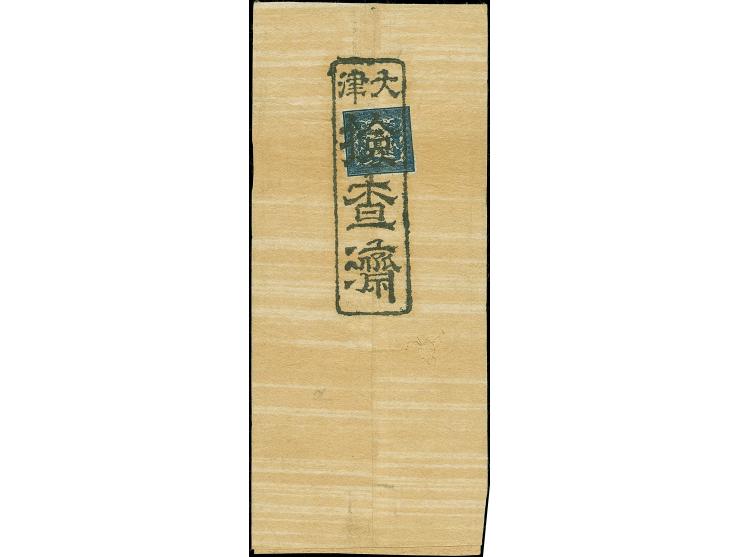
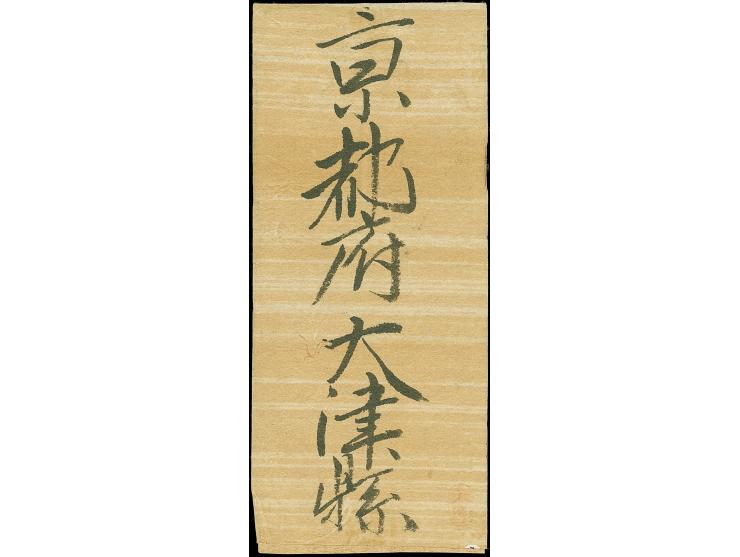
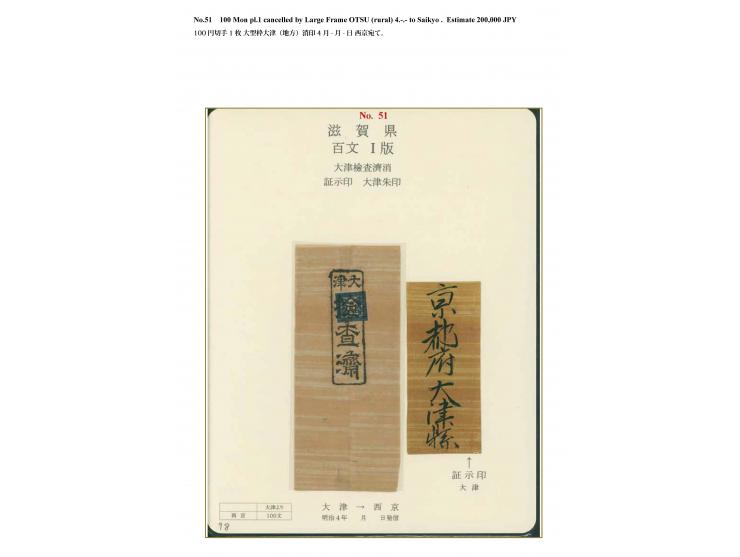
1871, 100 mon blue, late printing, plate I, position 21, touched at right frameline, tied by large "Otsu Kensazumi" (Nakagawa type A of Meiji 4) to the reverse of an illustrated cover to Kyoto.
Official correspondence from the Otsu prefectural administration to the Kyoto city administration. At lower right, vermilion oval framed "Otsu". No dateline survives, though usage in the second half of Meiji 4 is assumed.
An attractive official and illustrated cover, combining administrative origin with the scarce Otsu Kensazumi in its early form.
Rate: 100 mon basic rate, separate area rate of the first rate period.
Reference: Illustrated in Dragon Covers, p. 34.


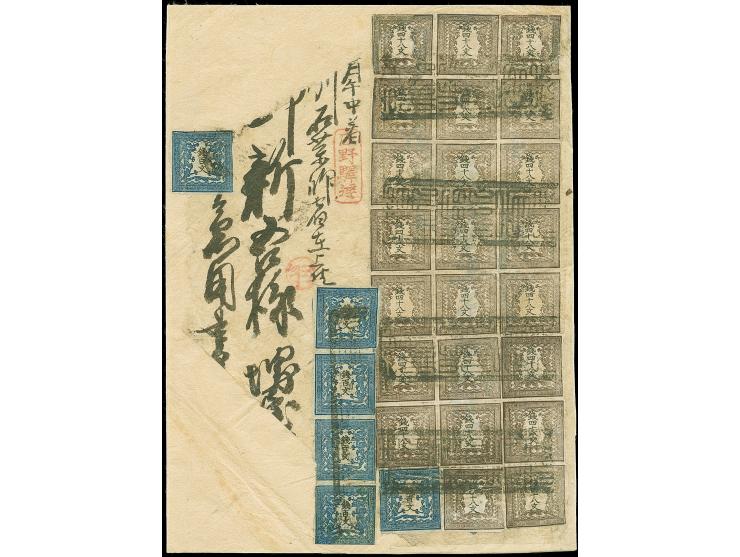
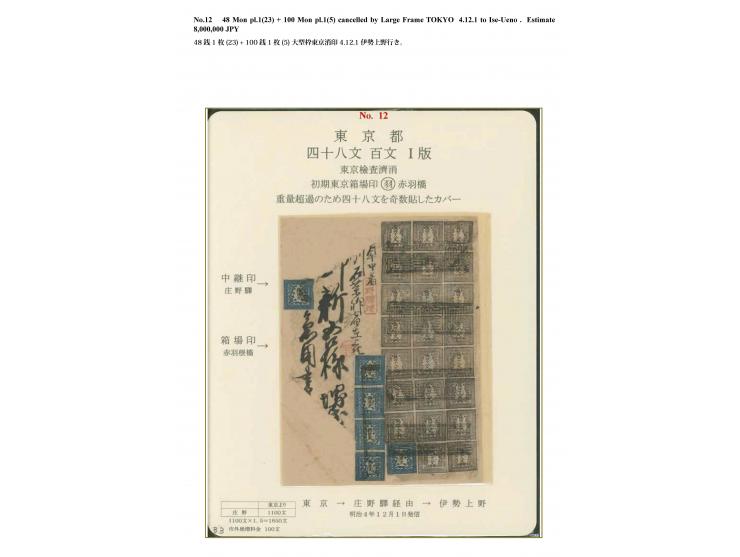
1871, 48 mon brown, plate I (position 23), comprising a block of eighteen, vertical strip of four, and single, used in combination with 100 mon plate I (position 6, strip of four and two singles), all tied by six strikes of a large "Tokyo Kensazumi" to the reverse of a cover, address side incomplete, via Shono, with framed vermilion "Shono eki tatsu", addressed to Ueno, Ise Province.
Manuscript dateline Meiji 4.12.1 (10 January 1872).
On the address side, a red circular framed hakoba-in "ba" (羽) of Akabanebashi.
An exceptional and rare example of intended usage of the 48 mon fractional value to satisfy a higher weight rate during the first rate period. Fewer than ten such covers have been recorded.
Rate: Higher weight rate: Tokyo to Shono separate area rate of the first rate period—1100 mon × 1.5 = 1650 mon, plus 100 mon for delivery beyond the standard circuit.
Reference: Illustrated in Dragon Covers, p. 35.


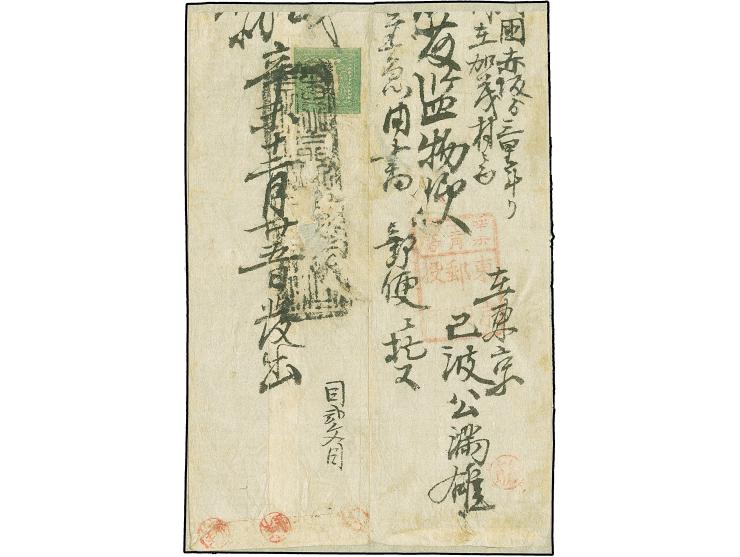
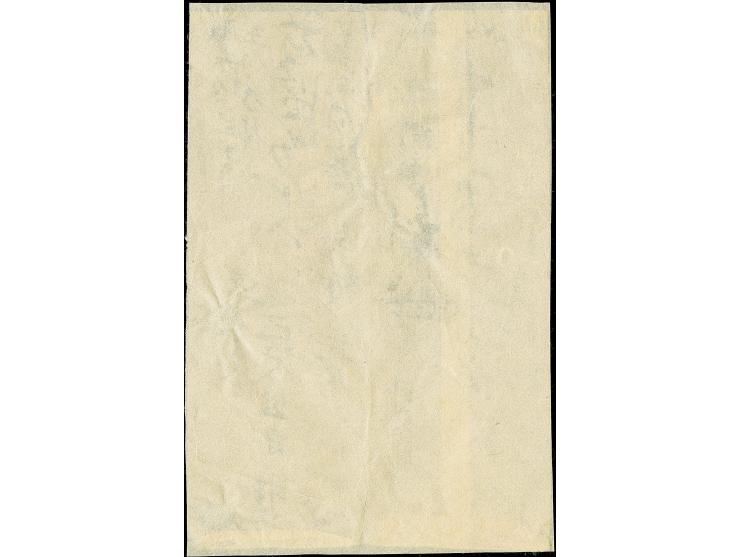
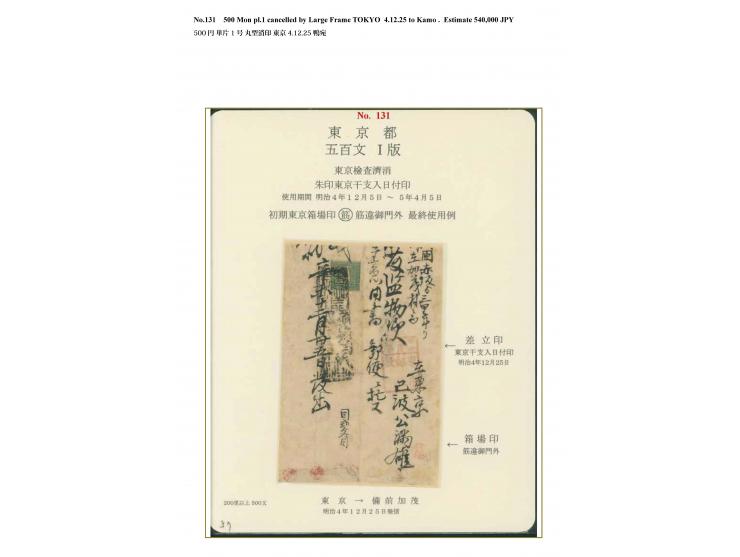
1871, 500 mon pale dull green, middle period printing, plate I, position 32, tied by large "Tokyo Kensazumi" to a cover to Kaso, Bizen Province. Cover slightly reduced at top; thins at centre on reverse (backed). Opened out for display.
First-month usage of the Tokyo datestamp, framed in vermilion "year of the goat 12th month 25th day / Tokyo postal bureau", or Meiji 4.12.25 (5 February 1872). On the address side at lower right, vermilion circular framed hakoba-in "suji" (筋) of the letter box outside the Sujikai gate. This is the latest recorded usage of this hakoba.
A highly desirable Tokyo cover, notable both for its late use of the Sujikai letter box mark and its clear first-month datestamp.
Rate: Exceeding 200 ri = 5 sen, second rate period.
Reference: Illustrated in Dragon Covers, p. 39.
Note: The earliest printing of the 500 mon comprises the shades "greyish yellow-green" and "dull yellow-green". Any other early green shade is classified as "early printing". For comparison, see Dragon Plating Guide, p. 22.


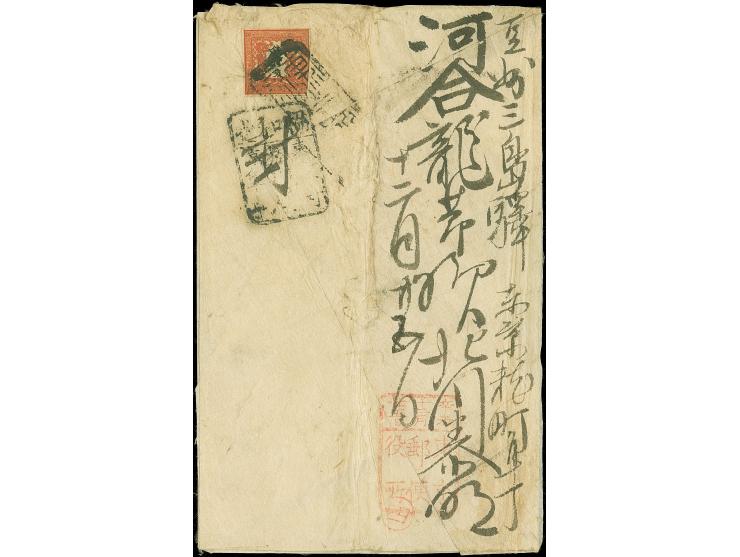
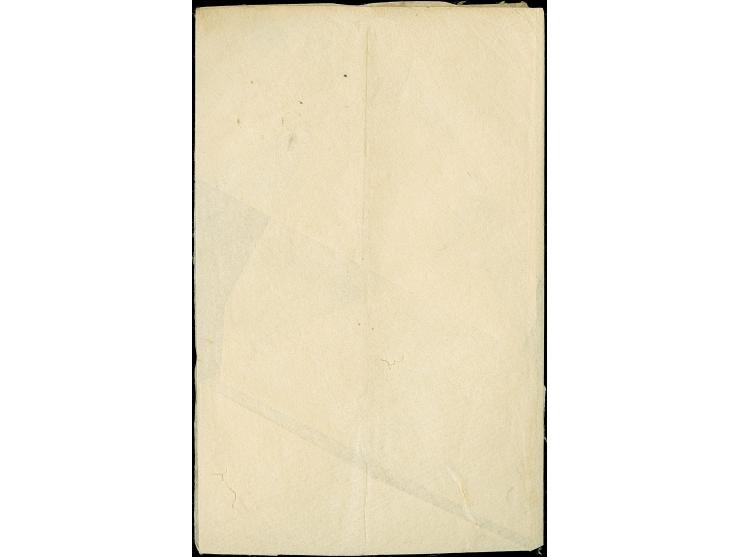
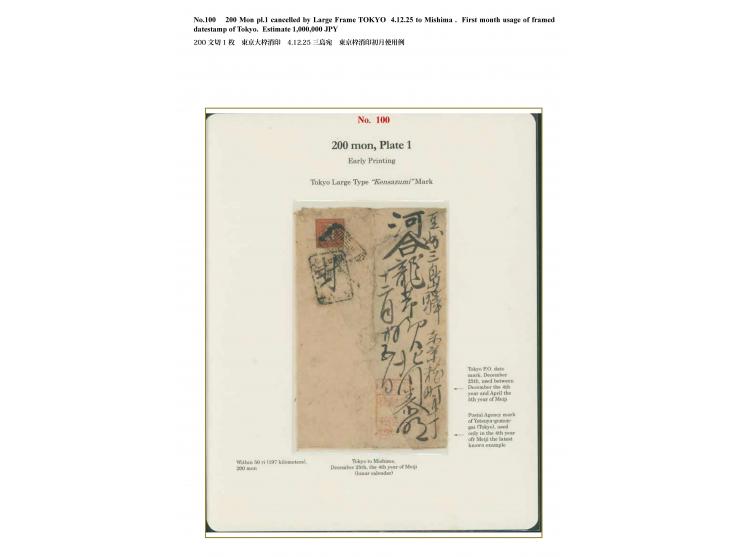
1871, 200 mon, middle period printing, plate I, position 39, stamp partly cut at right, tied by large "Tokyo Kensazumi" to a cover to Mishima, Suruga Province.
First-month usage of the Tokyo datestamp, framed in vermilion "year of the goat 12th month 25th day", or Meiji 4.12.25 (5 February 1872). On the address side at lower right, vermilion circular framed hakoba-in "yon" (四) of Yotsuya-gomongai, the letter box outside the Yotsuya gate, here in its latest recorded usage.
A highly desirable Tokyo cover, of particular significance for the latest known date of the Yotsuya letter box mark.
Rate: Within 50 ri = 200 mon, second rate period.
Reference: Illustrated in 19th century, fig. 23.


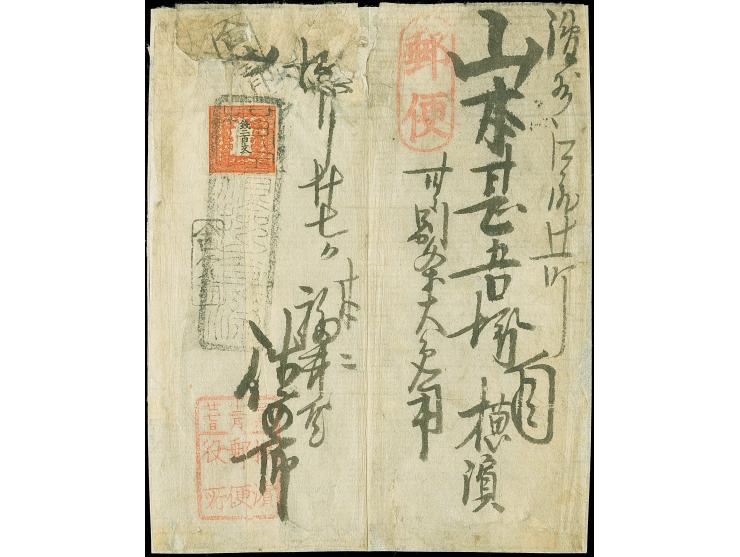
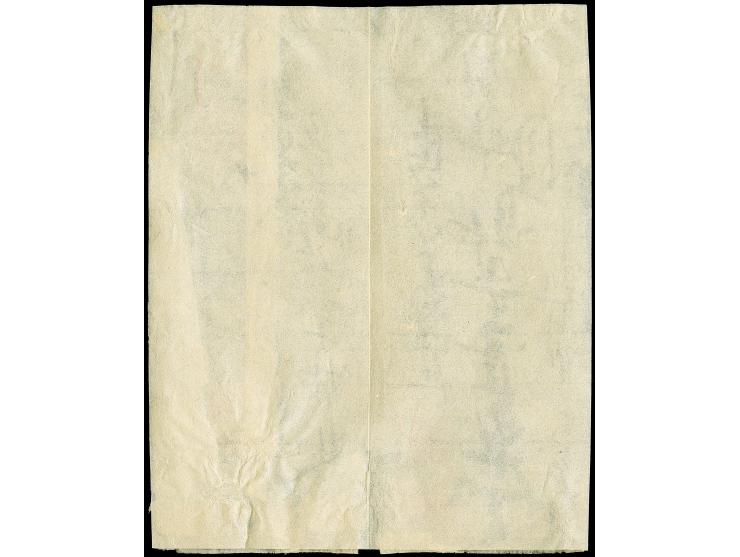
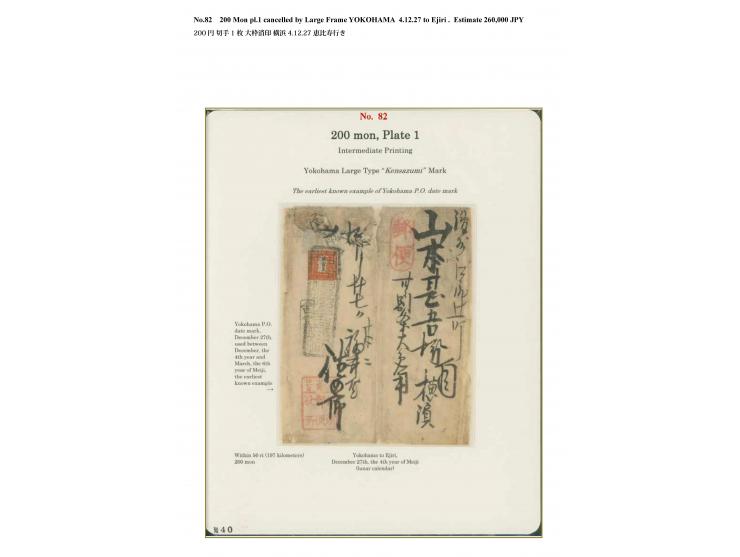
1871, 200 mon, middle period, plate I, position 35, tied by a full strike of large "Yokohama Kensazumi" to the reverse of a cover, mounted on paper, to Ejiri, Suruga Province.
Alongside, vermilion framed "year of the cock 12th month 27th day / Yokohama postal bureau", or Meiji 4.12.27 (7 February 1872).
The earliest recorded example of this Yokohama datestamp, giving the cover notable postal-historical importance.
Rate: 200 mon within 50 ri distance, second rate period.
Reference: Illustrated in Dragon Covers, p. 40.


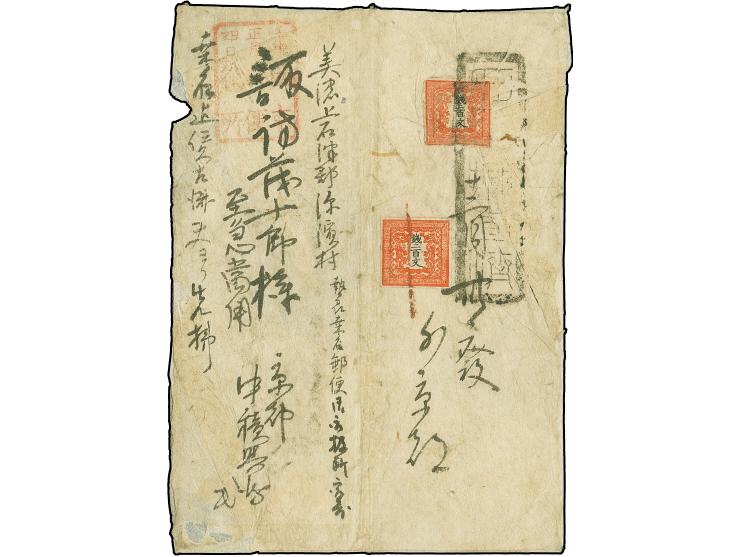
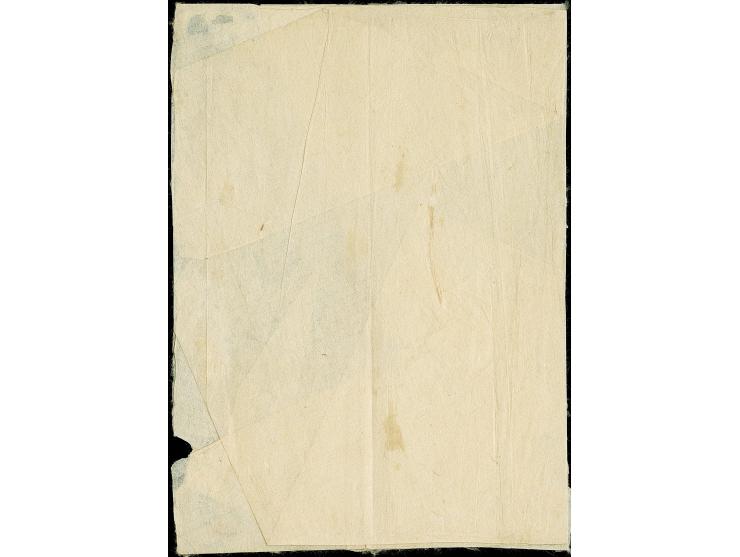
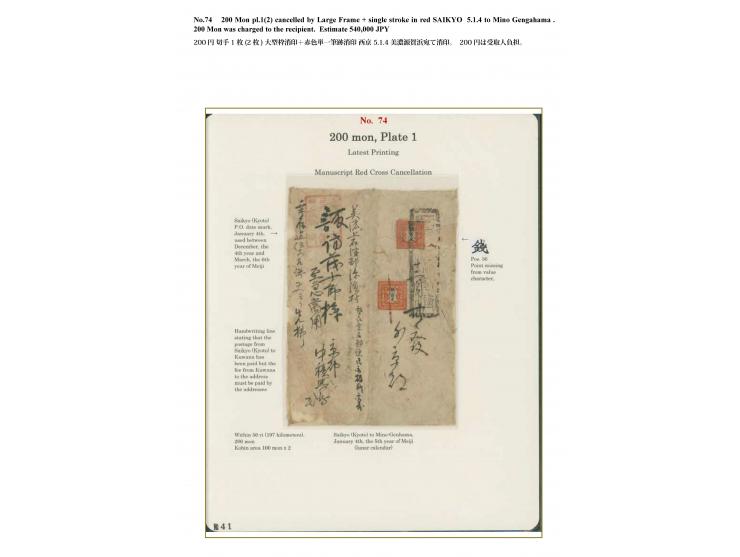
1871, 200 mon, latest printing, plate I, position 36, showing the constant variety "dot of sen missing", tied by large "Saikyo Kensazumi" to the reverse of a cover to Gengahama, Mino Province.
On the address side, framed vermilion "year of the monkey 1st month 4th day / Saikyo postal bureau" (12 February 1872), with manuscript notation: "Postage paid unto Kuwana, but from Kuwana to destination postage must be paid by addressee". The kobin charge was paid by latest printing plate I, position 8, with positional pinhole, tied by vermilion brush stroke.
A highly interesting due usage, combining a constant variety with postal markings and manuscript instructions of considerable specialist interest.
Rate: Up to 50 ri = 200 mon; kobin area 100 mon x 2, second rate period.
Reference: Illustrated in Dragon Covers, p. 41.


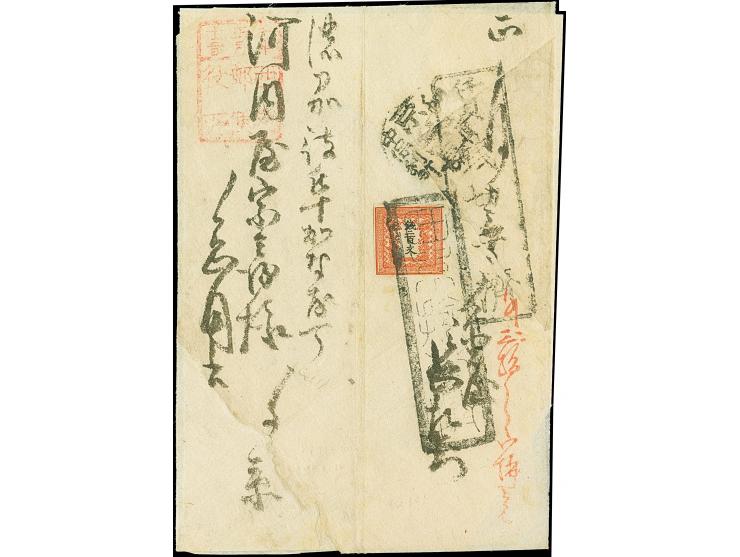
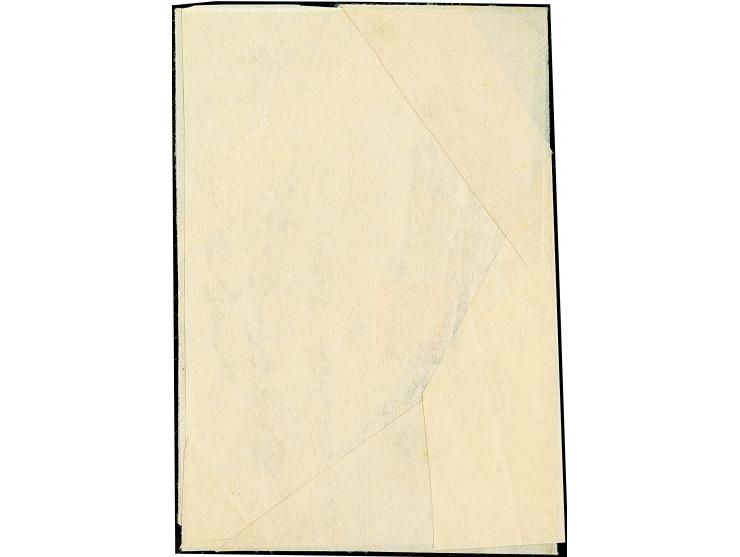
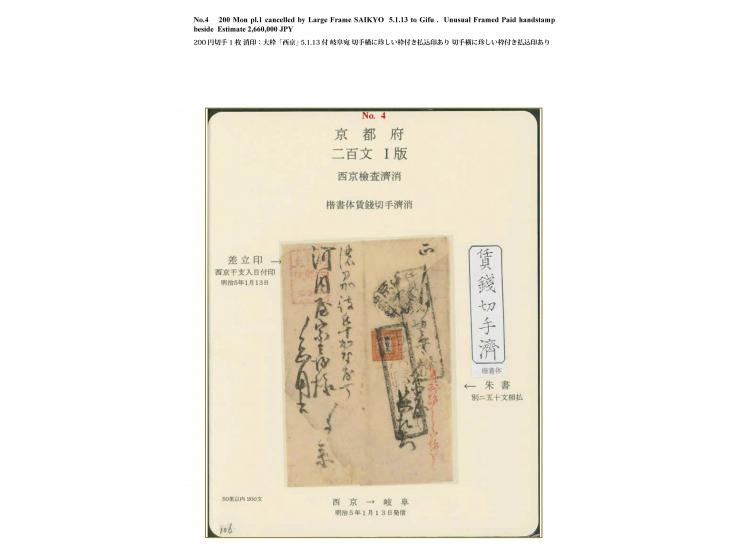
1871, 200 mon vermilion, earliest printing, plate I, position 26, tied by a large "Saikyo Kensazumi" to the reverse of a cover to Gifu, accompanied by a large framed "Chinsen Kitte Zumi" marking ("prepayment for return postage paid").
On the address side, a red framed "Saikyo / year of the monkey [Meiji 5] 1st month 13th day" (21 February 1872). Red manuscript notation indicates an additional 50 mon payment.
Only eight covers are recorded bearing the large "Chinsenkittezumi" marking. Notably, its precise and documented postal function remains uncertain; extant examples suggest usage upon arrival, certifying payment to a courier for delivery beyond the standard postal agency distribution network.
A rare and intriguing auxiliary marking of considerable postal-historical interest.
Rate: 200 mon up to 50 ri distance, basic weight, second rate period.
Reference: Illustrated in Dragon Stamps Plating Book, p. 108; Dragon Covers, p. 42; listing in Dragon Stamps Plating Book, p. 104, no. 7.


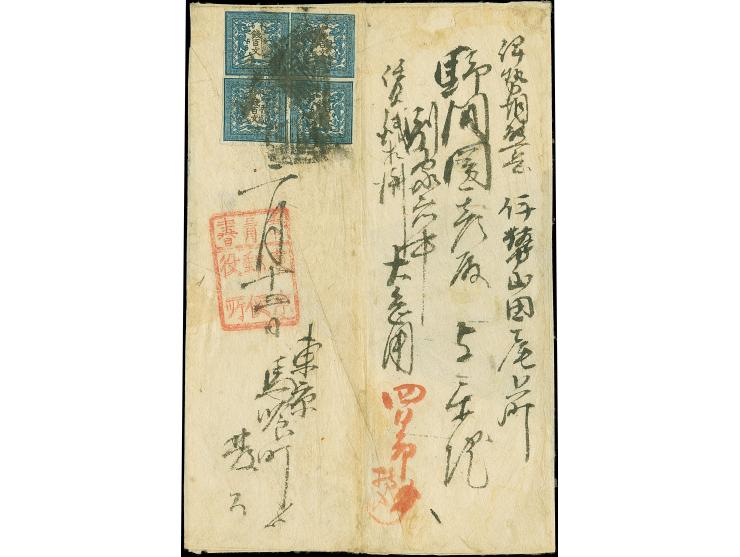
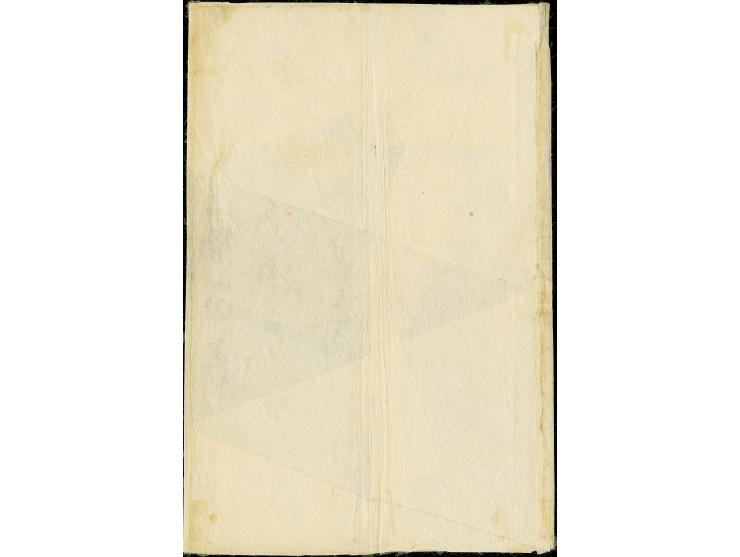
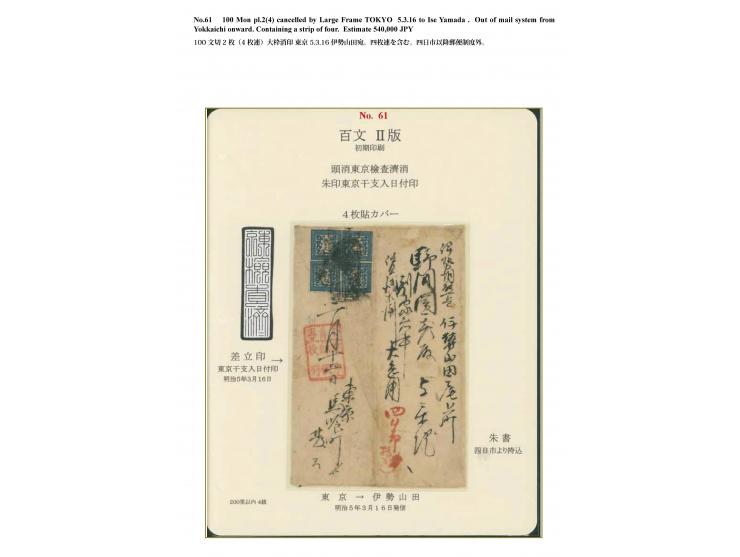
1871, 100 mon blue, plate II, early printing, a block of four, positions 31-32-39-40, tied by the head section* of large "Tokyo Kensazumi" to the reverse of a cover from Tokyo to Yamada, Ise Province.
Alongside, vermilion framed "year of the monkey 3rd month 16th day / Tokyo postal bureau", or Meiji 5.3.16 (23 April 1872). Vermilion manuscript notation: "from Yokkaichi carry on" (持込).
A scarce and highly attractive multiple on cover, made particularly interesting by the officially regulated head-portion strike and the manuscript instruction for onward courier conveyance.
Rate: Within 100 ri distance = 3 sen, plus 1 sen delivery to a destination outside the postal circuit of the next post office, second rate period. Tokyo to Yokkaichi/Ise was within 100 ri; Yokkaichi to Yamada/Ise was carried onward by courier (approximately 18 ri).
Reference: Illustrated in Dragon Covers, p. 137.
Note: *Head section: the "large placename Kensazumi" postmarks were officially ordered in Meiji 4.12 to be struck with the placename head portion only, or even with the lower three characters removed. This is therefore not an incomplete strike, but a consequence of official regulation.


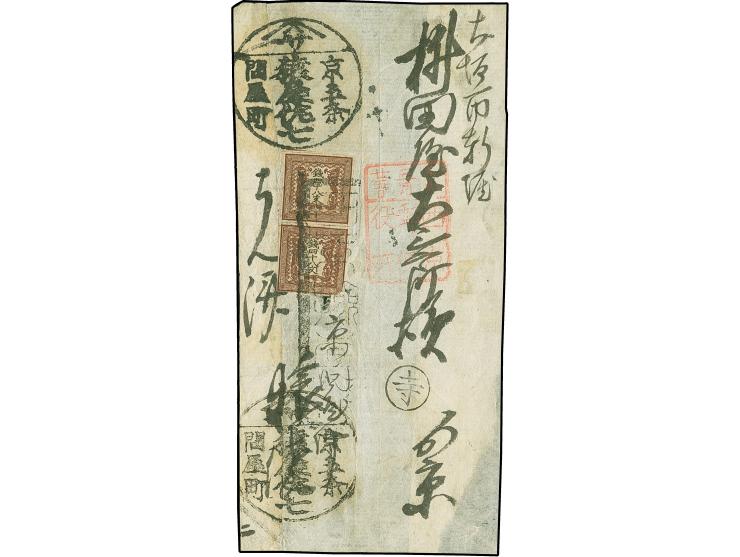
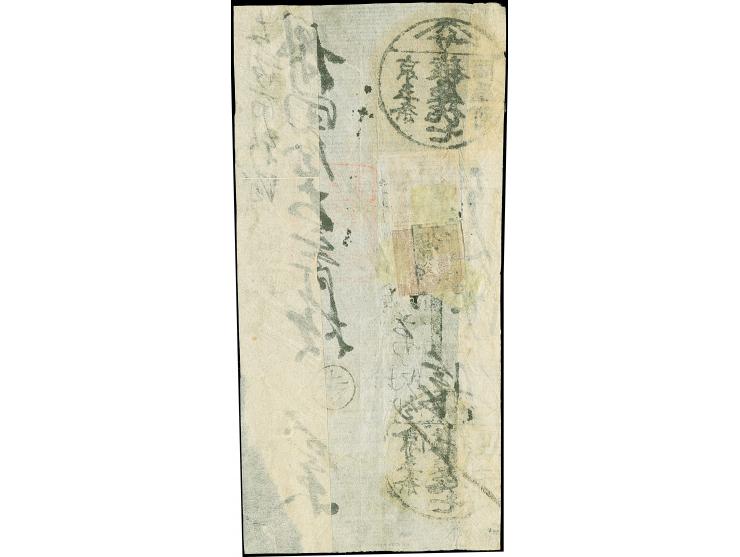
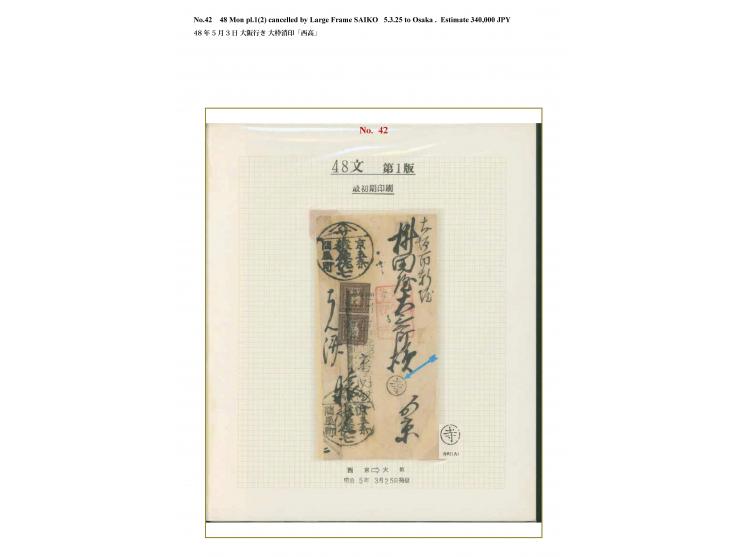
1871, 48 mon brown, earliest printing, plate I, a vertical pair, positions 15-23, tied by large "Saikyo Kensazumi" to the reverse of cover, slightly reduced at top and left, to Osaka.
Framed vermilion "year of the monkey 3rd month 25th day / Saikyo postal bureau", or Meiji 5.3.25 (2 May 1872). Circular framed hakoba-in "tera" (寺) of Teramachi letter box.
A pleasing and scarce cover, further enhanced by the presence of the Teramachi letter box marking.
Rate: Up to 25 ri distance = 1 sen, second rate period.