
Auction Detail
The Yasushi Tejima Collection Japan Dragon Stamps Part 1


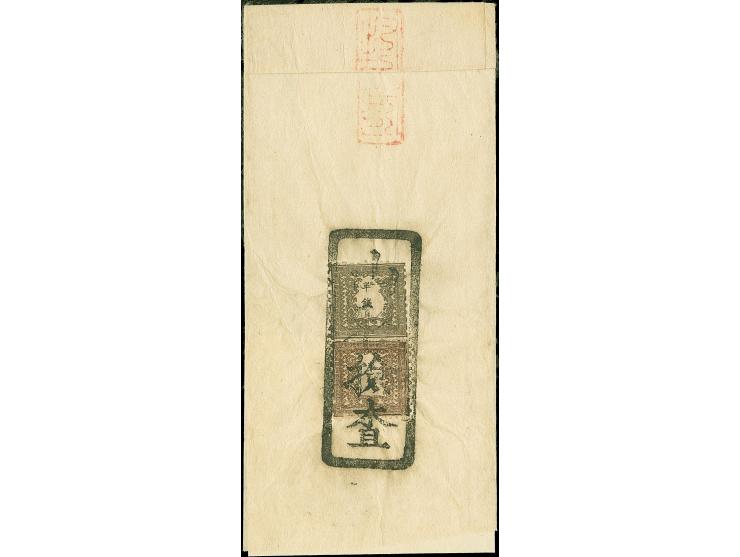
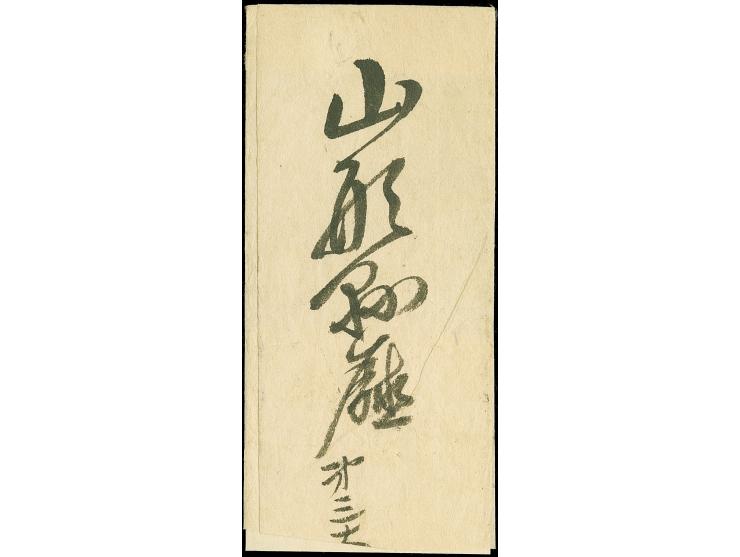
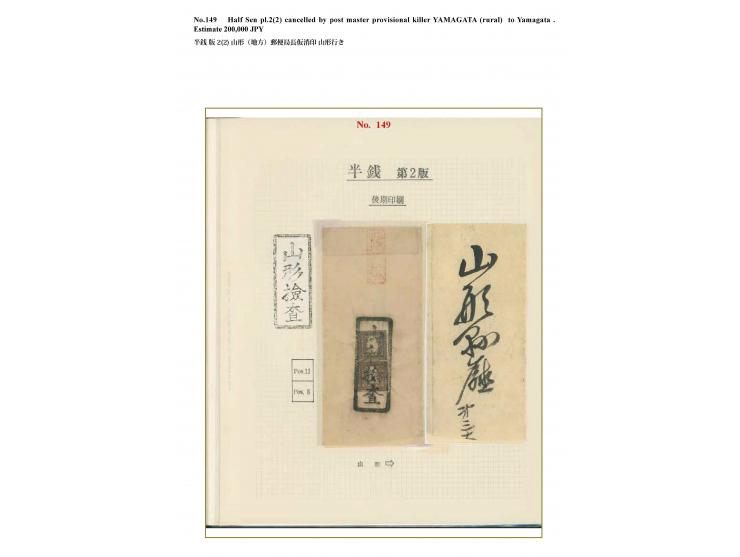
1872, 1/2 sen brown, plate II (2), late printing, in two different shades, olive brown and brown, positions 13 and 8, tied by framed non-standard "Yamagata Kensazumi" to the reverse of an unsealed cover to District No. 27.
No dateline, though Meiji 7 (1874) is suggested.
A scarce and appealing local official usage, notable for the uncommon unsealed format and the attractive two-shade franking.
Rate: 1 sen, administration reply unsealed within the same district at half-letter rate, introduced Meiji 6.5.1.


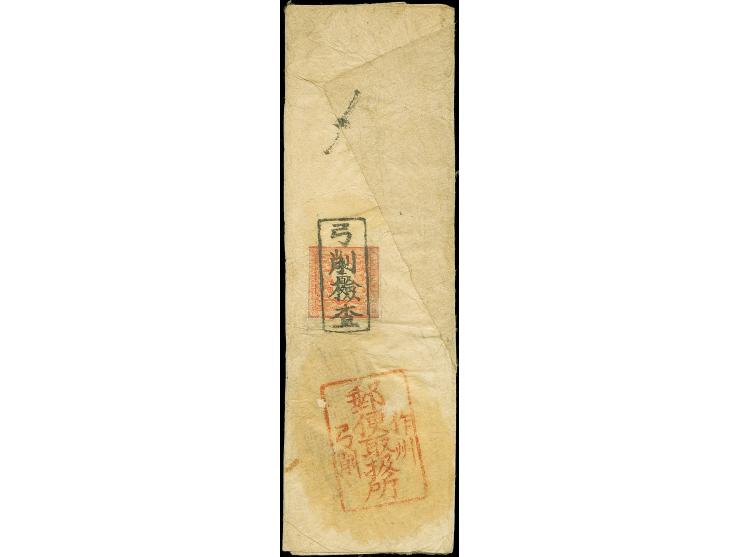
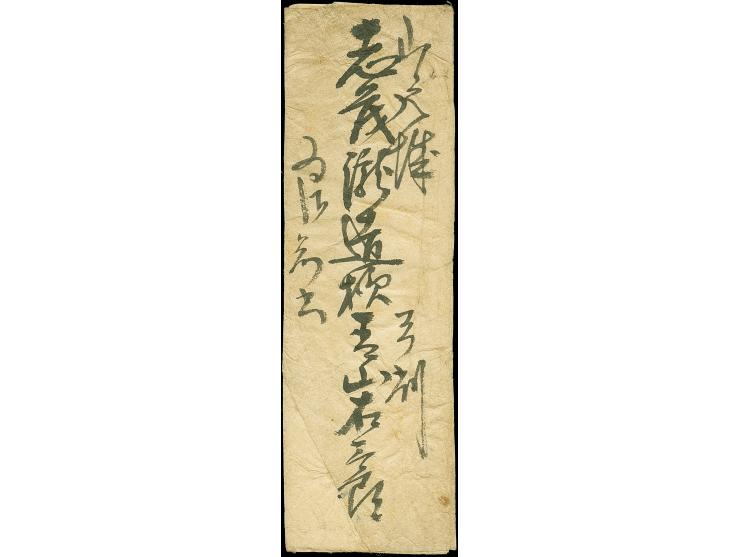
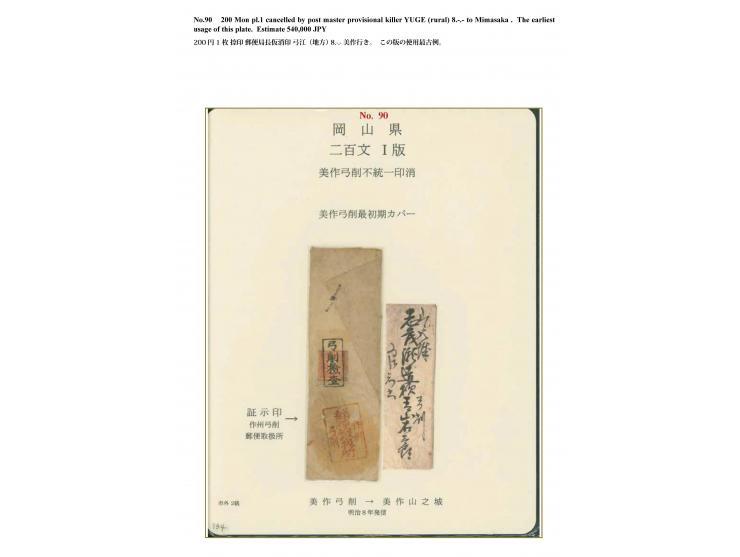
1871, 200 mon vermilion, late printing, plate I, touched to cut at left frame, slightly oxidised, tied by framed non-standard "Yuge Kensa", with vermilion framed "Sakushu / postal receiving and handling agency / Yuge" alongside, to the reverse of a small cover to Yamanoshiro, Mimasaka Province.
Sakushu is an old alternative name for Mimasaka. No dateline is present, though usage is assumed to fall in Meiji 8 (1875). The Yuge post office opened on Meiji 7.12.16 (16 December 1874).
The earliest recorded cover from Yuge, and a highly attractive example of this rare fancy cancellation.
Rate: 2 sen, unified nationwide rate from Meiji 6.4.1 onward.


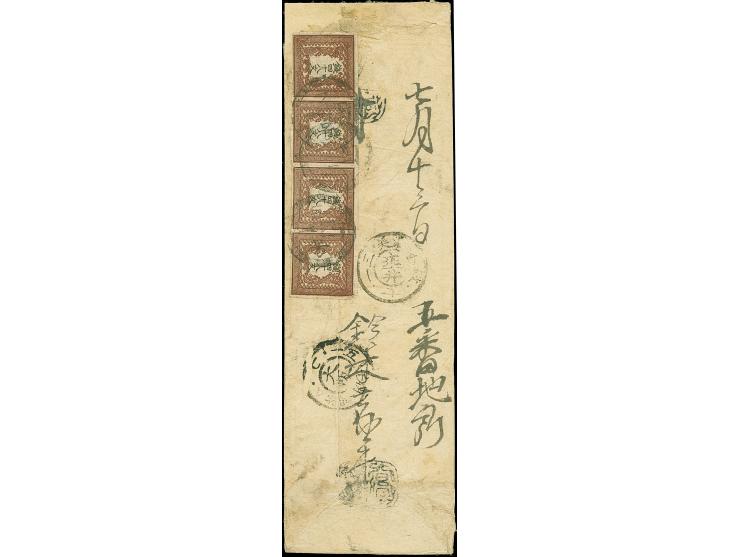
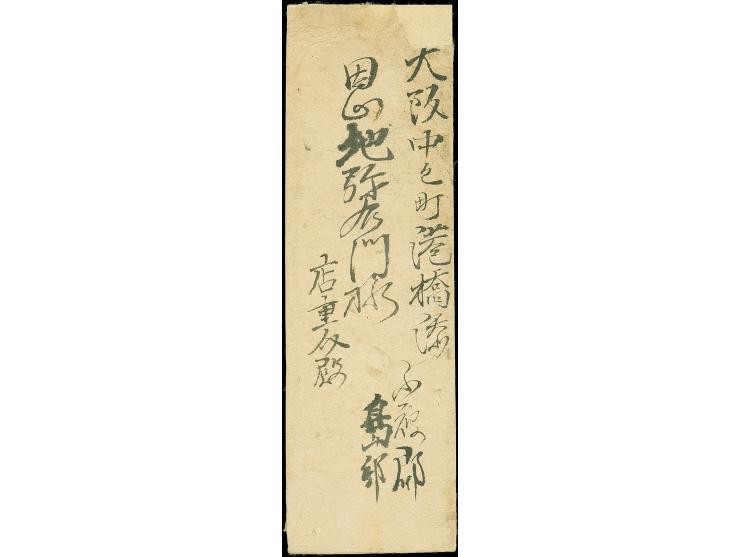
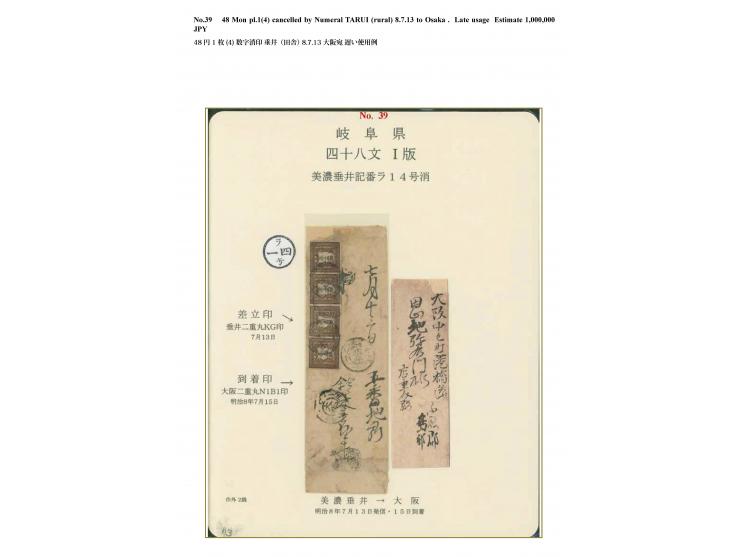
1871, 48 mon, early printing, plate I, a horizontal strip of four, positions 5-8, tied by three strikes of kiban ra-14 (Tarui, Mino Province), with double-circle type KG "Tarui -7.13" alongside, to the reverse of a cover to Osaka, with arrival type N1B1 Meiji 8.7.15 (15 July 1875).
One of very few recorded 48 mon covers cancelled by kiban postmark, and the latest recorded usage of the 48 mon Plate I on cover.
Rate: Nationwide letter, basic weight 2 sen, unified standard rate of the third rate period from Meiji 6.4.1 onward.
Reference: Illustrated in Dragon Covers, p. 119.


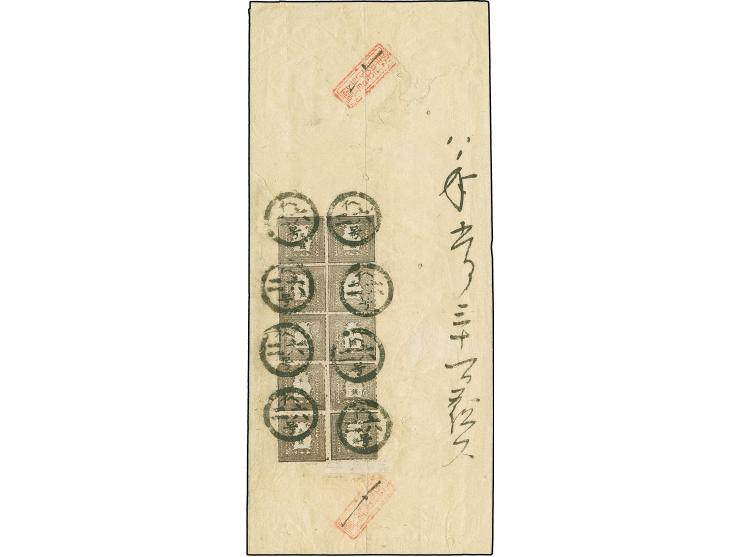
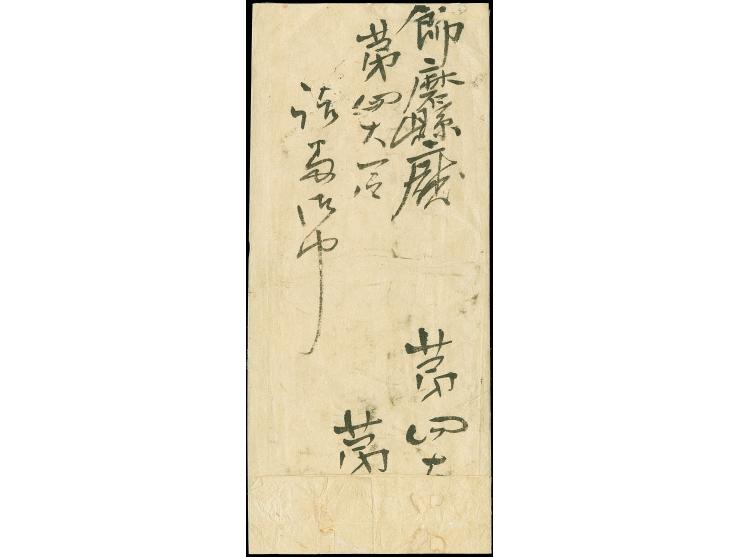
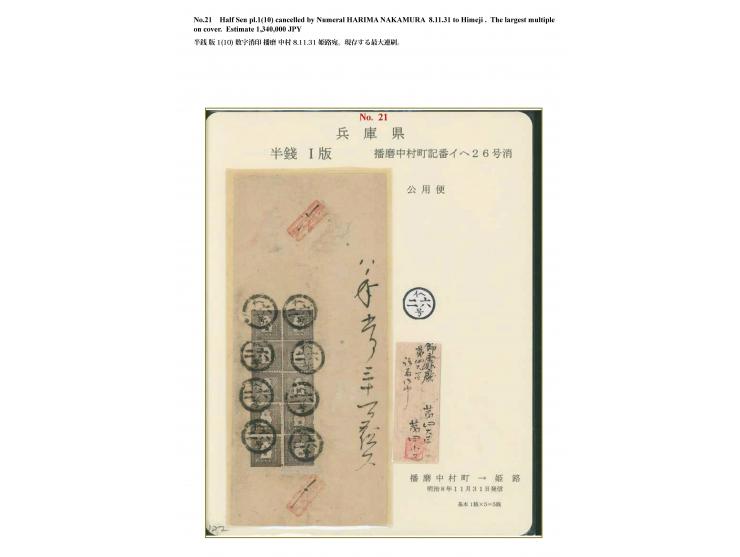
1872, 1/2 sen brown, plate I, a block of 10 (2 x 5), tied by eight strikes of kiban i-he 26 (Nakamura, Harima Province) to the reverse of a cover to Himeji.
Manuscript dateline Meiji 8.11.31 (31 November 1875).
The largest recorded multiple of the 1/2 sen Plate I on cover, a remarkable showpiece of the sen issue and an item of considerable rarity.
Rate: Half letter rate for official mail, five times weight = 5 sen.
Reference: Illustrated in Dragon Covers, p. 121.


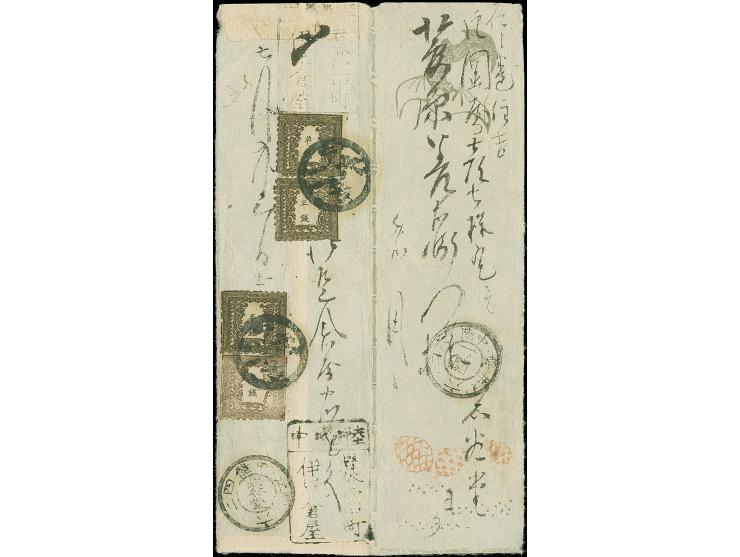
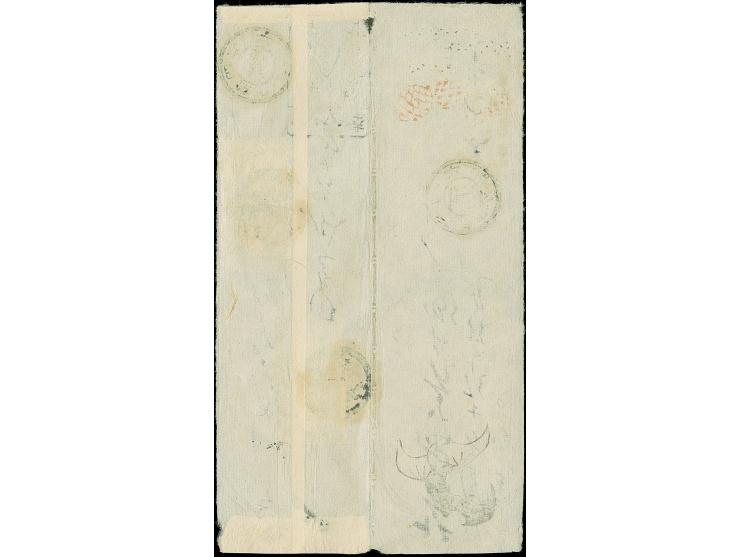
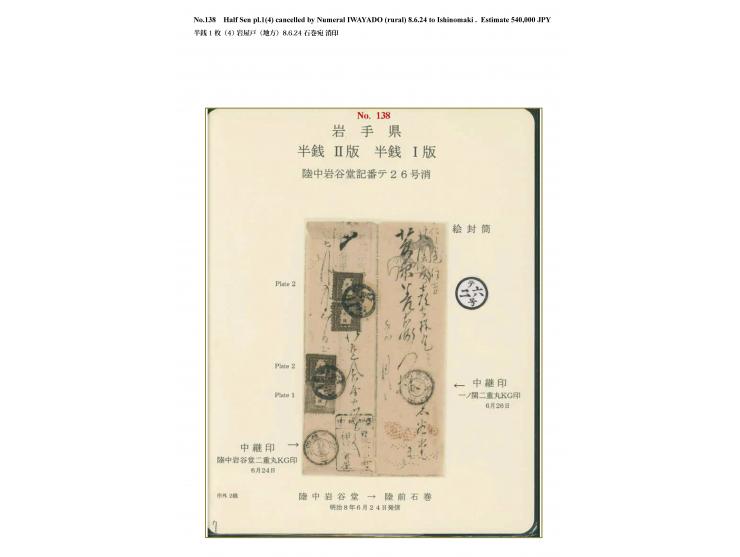
1872, 1/2 sen tan brown, plate I (1), with 1/2 sen dark brown, plate II (3, including a pair), tied by two strikes of kiban te-26 (Iwayado, Rikuchu Province) to the reverse of an illustrated cover to Ishinomaki, Rikuzen Province.
Double-circle type KG Iwayado -.6.24 alongside, with transit KG Ichinoseki -.6.26 on the address side. Contents still enclosed. This cover dates from Meiji 8 or 9 (1875 or 1876).
A most attractive mixed-plate franking on cover, additionally enhanced by the rare Iwayado kiban cancellation and retained contents.
Rate: Letter nationwide = 2 sen, unified rate period from Meiji 6.4.1.
Reference: Illustrated in Dragon Covers, p. 118.


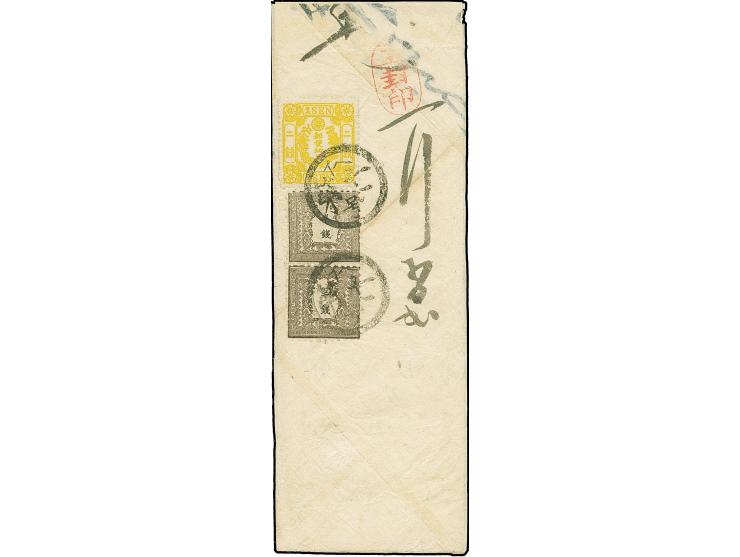
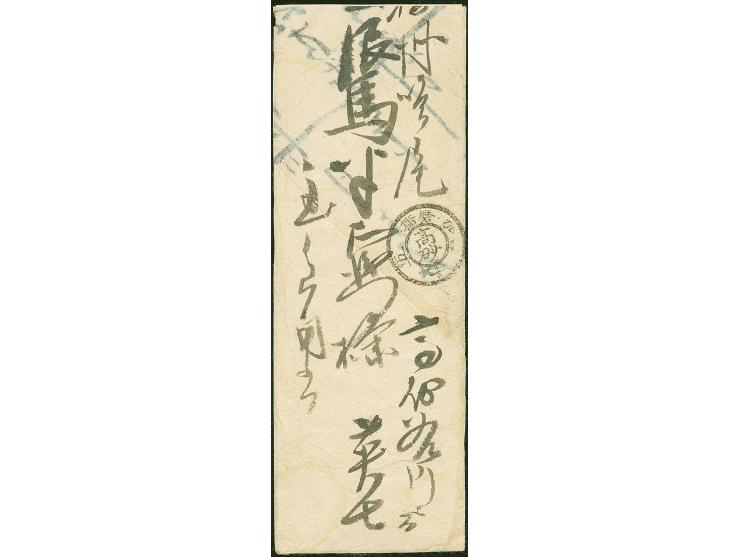
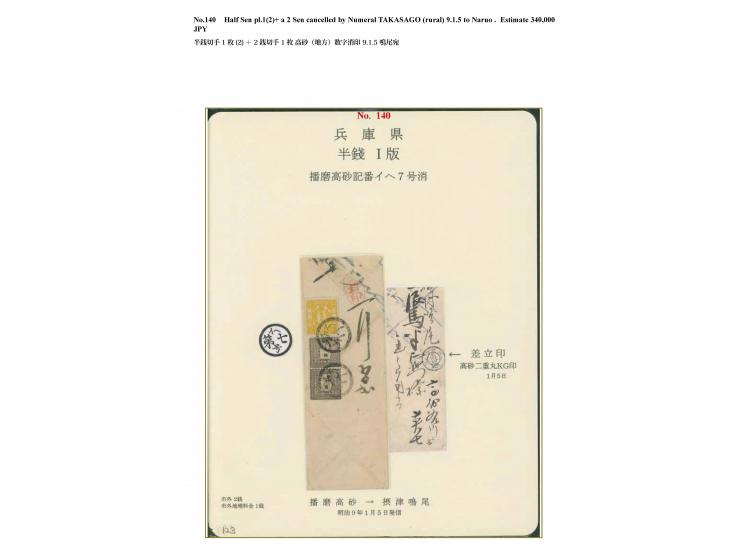
1872, 1/2 sen greyish brown, plate I, a vertical pair, positions 28-36, used in combination with Cherry Blossom 2 sen yellow "Ribbon", tied by two strikes of kiban i-he 7 of Takasago, Harima Province, to the reverse of an illustrated cover, reduced at top, to Naruo, a destination outside the postal delivery circuit.
The 1/2 sen pair paid the 1 sen messenger surcharge. Manuscript dateline "1st month 27th day" and double-circle type KG Takasago -1.5. Date is Meiji 9.1.5 (5 January 1876) at the earliest.
A scarce and attractive mixed franking, notable for the use of the 1/2 sen pair to satisfy the messenger fee.
Rate: Letter nationwide 2 sen, plus 1 sen to a place outside the postal delivery circuit = 3 sen, unified rate period from Meiji 6.4.1.
Provenance: Consul General Dr. Borchers (Rapp auction, 1986)
Reference: Illustrated in Dragon Covers, p. 122.


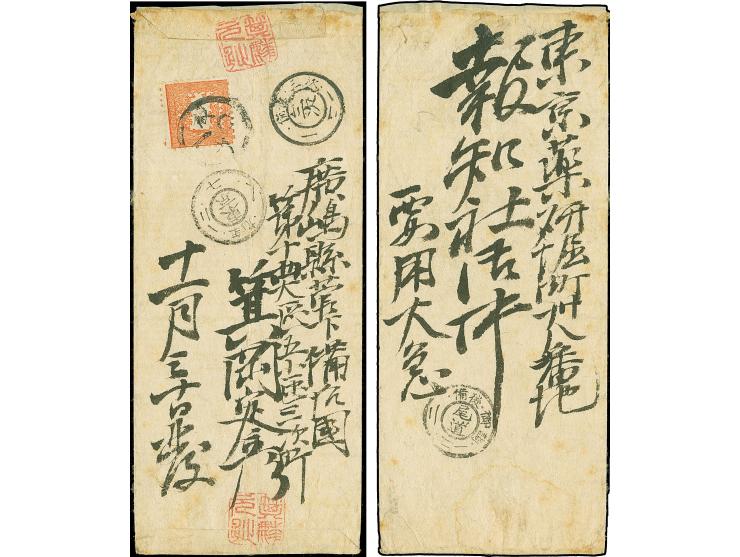
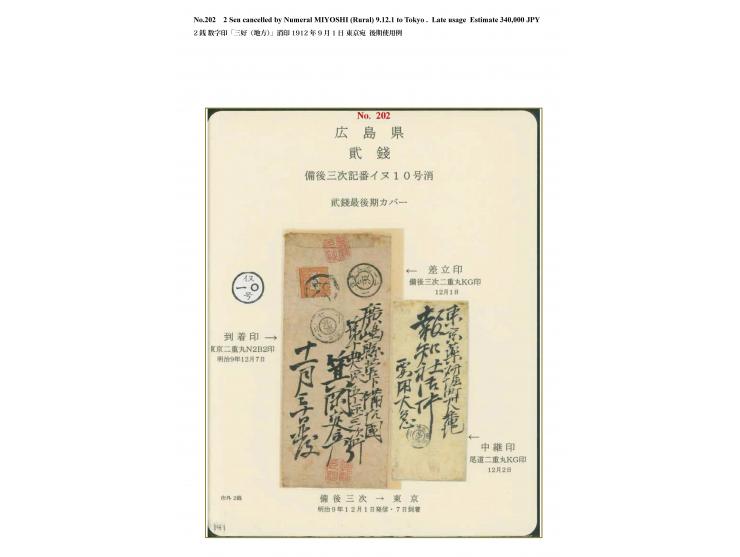
1872, 2 sen vermilion, tied by kiban i-nu 10 (Miyoshi, Bingo Province) to the reverse of a cover to Tokyo.
Alongside, double-circle "Miyoshi. Bingo 12.1" of Meiji 9.12.1 (1 September 1876). Transit double-circle KG "Onomichi. Bingo 12.2" on the address side, and arrival double-circle N2B2 "Tokyo Meiji 9.12.7".
A notably late usage of the 2 sen Dragon, further enhanced by the scarce Miyoshi kiban cancellation.
Rate: Letter 2 sen nationwide, unified tariff from Meiji 6.4.1.
Reference: Illustrated in Dragon Covers, p. 125.


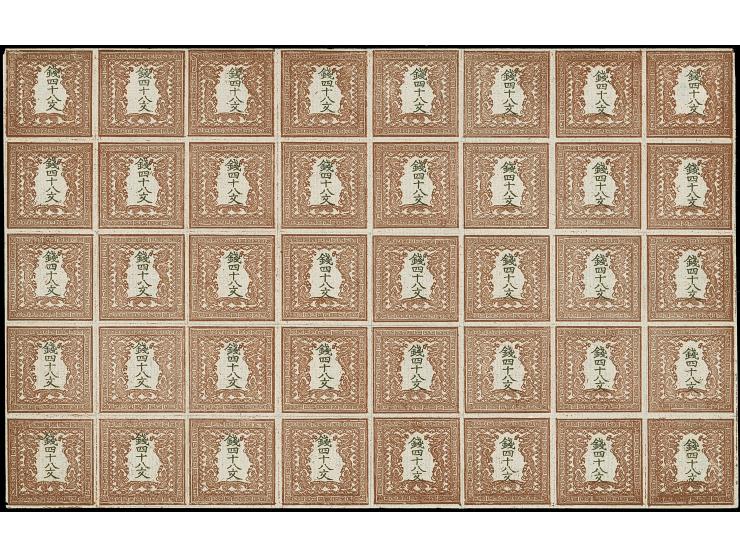
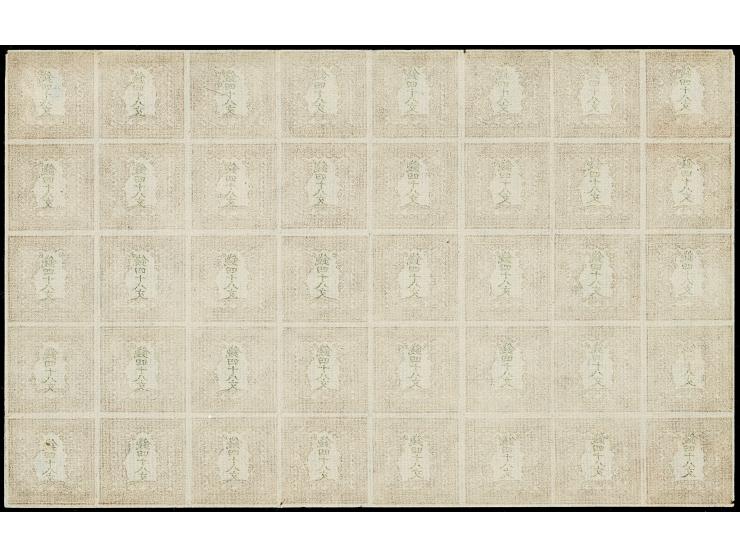
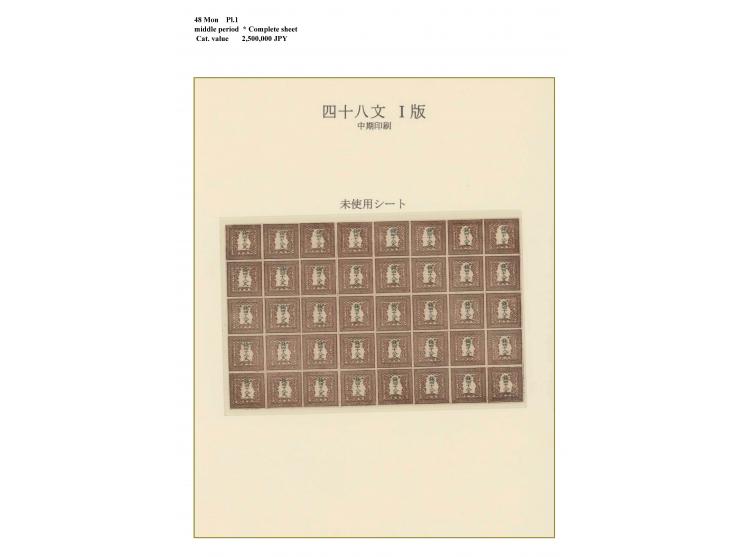
1871, 48 mon brown, plate I, middle period printing, complete full sheet, unused without gum as issued.
A highly impressive and rarely encountered full-sheet multiple of the first issue, preserved in pristine unused condition as issued. A major showpiece for the specialist in classic Japan.
Catalogue Value: (JSCA cat. ¥2,400,000)


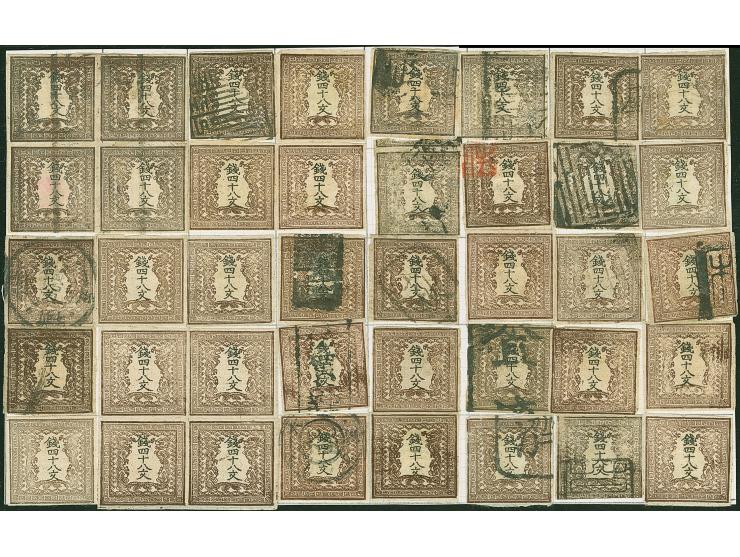
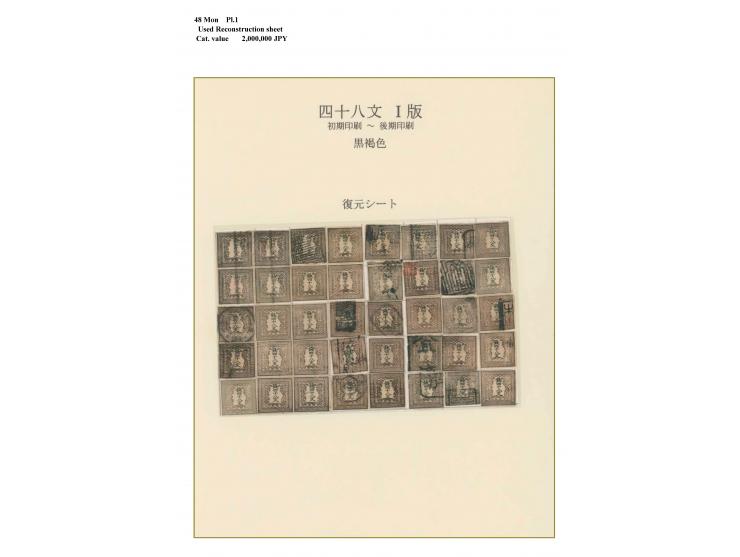
1871, 48 mon dark brown to blackish brown, plate I, early to late printing, full sheet reconstruction by unused and used stamps, including a mint block of six, used block of four, and mint mirror-L unit, together with two clear strikes of standard double-circle type N1B1 in late usage, as well as fancy cancellations.
A particularly engaging reconstruction, notable for its combination of mint and used material and its strong range of cancellations.
Catalogue Value: (JSCA cat. ¥2,000,000)


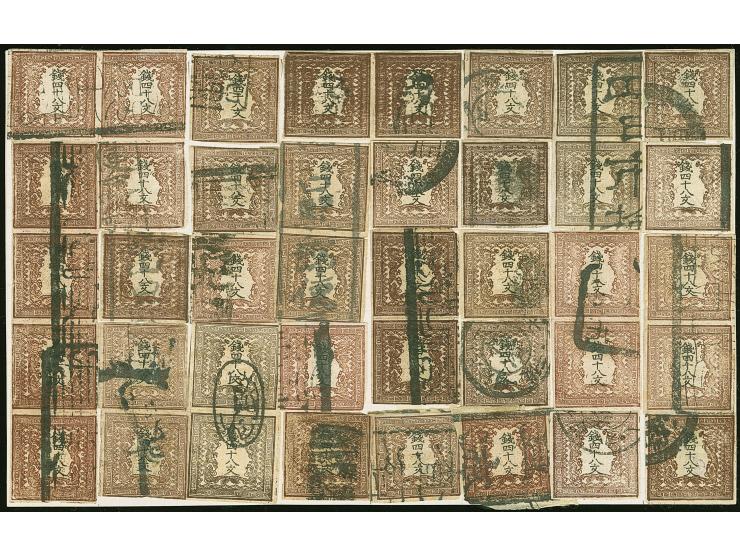
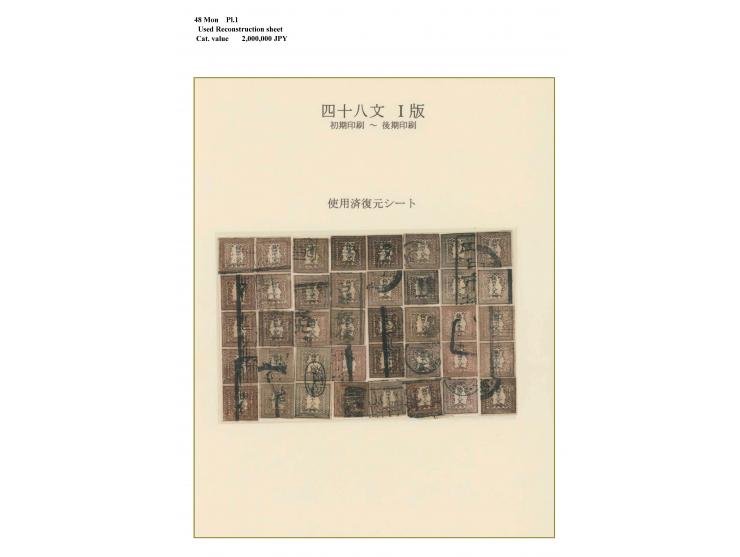
1871, 48 mon brown, plate I, early to late printing, full sheet reconstruction by used stamps, including a vertical strip of four, positions 9-17-25-33, with large Osaka Kensazumi, and nine pairs showing attractive postmarks, among them large Yokkaichi Kensazumi, oval fancy type, and late Yokohama double-circle N1B1 of Meiji 7. Position 39 with fabricated cover marking "Daijoji".
A fascinating and highly characterful reconstruction, especially rich in postmark interest and postal-history appeal.
Catalogue Value: (JSCA cat. ¥2,000,000)


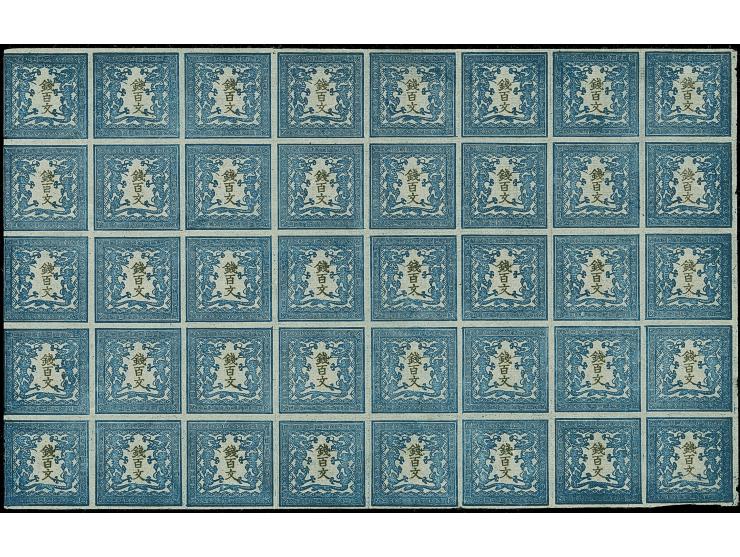
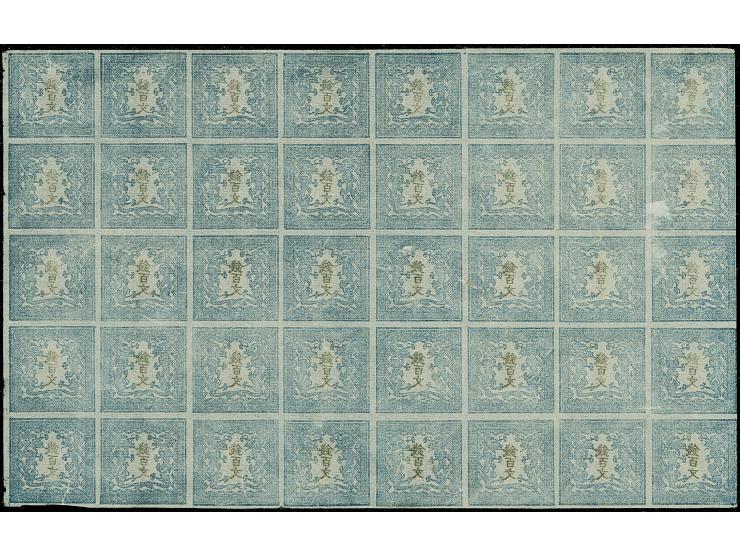
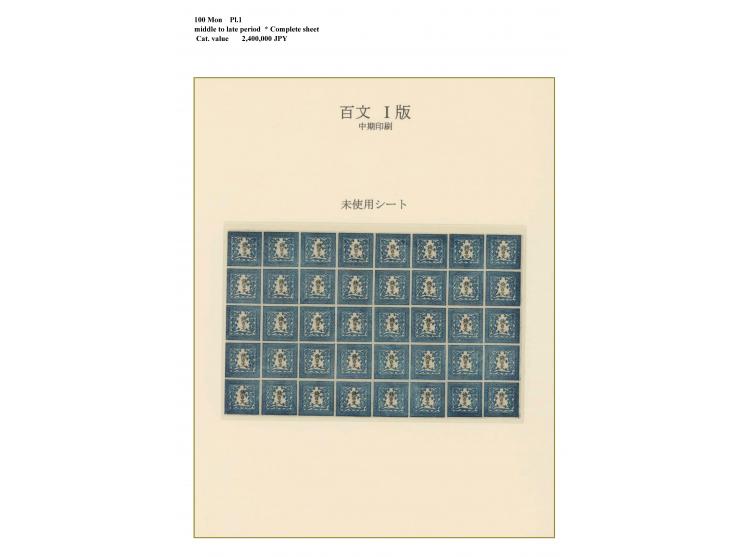
1871, 100 mon blue, plate I, middle period printing, complete full sheet, unused without gum as issued.
A magnificent surviving full sheet of the iconic 100 mon Dragon issue, offering exceptional visual impact and great importance for the advanced collector or exhibitor.
Catalogue Value: (JSCA cat. ¥2,400,000)


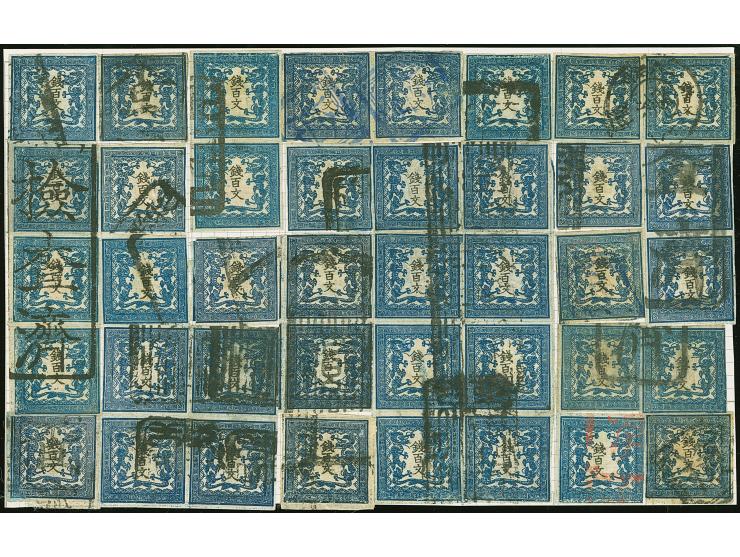
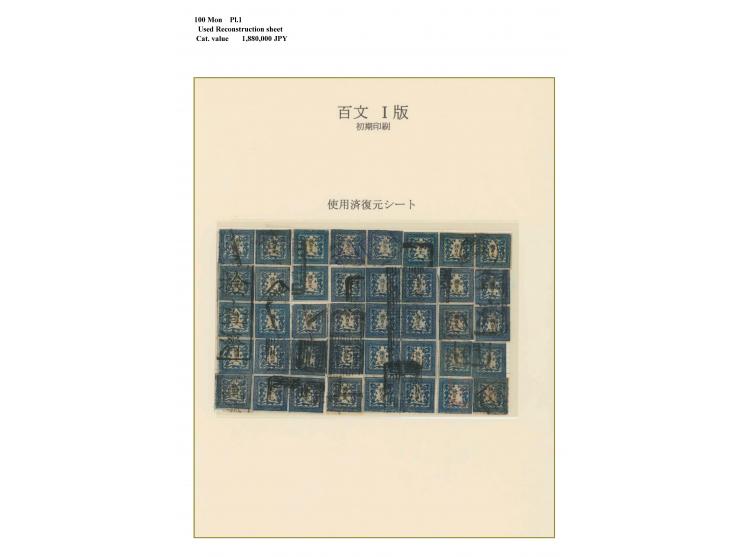
1871, 100 mon blue, plate I, early printing, full sheet reconstruction by used stamps, including a block of eight with large "Tokyo Kensazumi", a vertical strip of three, and seven pairs, including Osaka N1B1 double-circle usage.
A most attractive reconstruction, especially notable for the impressive Tokyo Kensazumi block and the strong range of postal markings represented.
Catalogue Value: (JSCA cat. ¥1,880,000)