
Auction Detail
The Yasushi Tejima Collection Japan Dragon Stamps Part 1


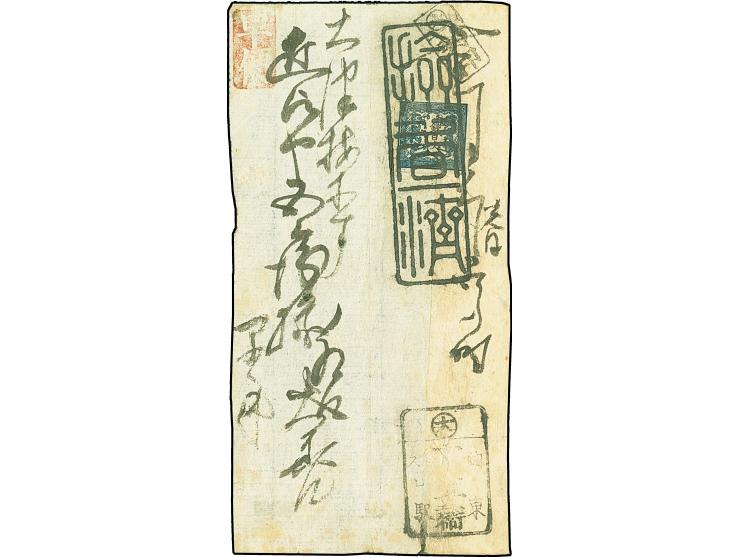
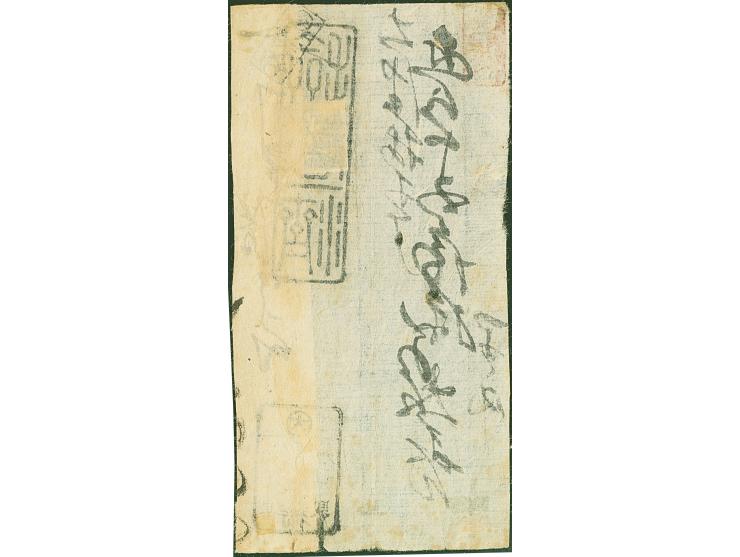
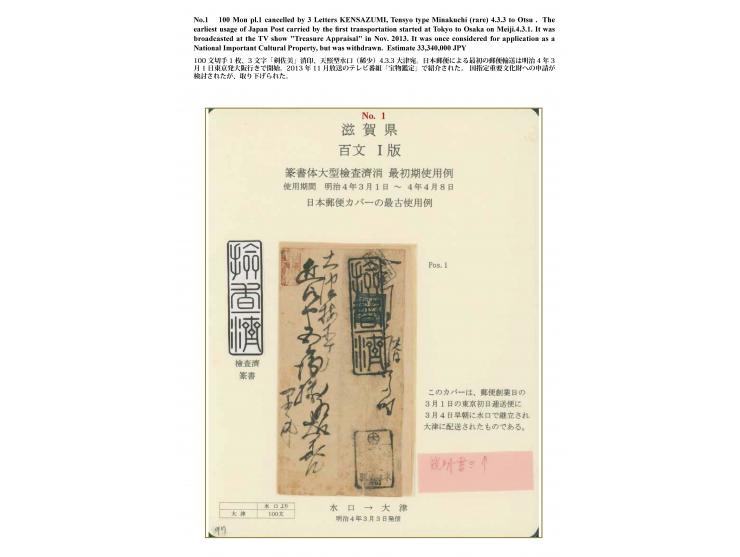
1871, 100 mon dark steel blue, earliest printing, plate I, position 1, tied by a large "Kensazumi" handstamp in small seal style (reisho) on the reverse of a cover from Minakuchi to Otsu.
Manuscript dateline (Meiji 4) 3.3, corresponding to 22 April 1871 (Gregorian).
A cover of extraordinary historical importance, carried during the first postal dispatch of Japan, originating from Tokyo on Meiji 4.3.1 (opening day of the national postal service). The letter was taken into the mail en route at Minakuchi on Meiji 4.3.4 (early morning) and subsequently delivered to Otsu. As the earliest recorded example associated with Japan’s inaugural postal operations, this cover represents a cornerstone artefact of Japanese postal history and an item of the utmost rarity and significance.
Rate: 100 mon basic rate, separate area rate of the first rate period.
Provenance: Dr. Ichida
Reference: Illustrated in Ichida (1959); Ichida (1971), colour plate A and p. 85; plating reference p. 92; Dragon Covers p. 2; 19th century fig. 3.


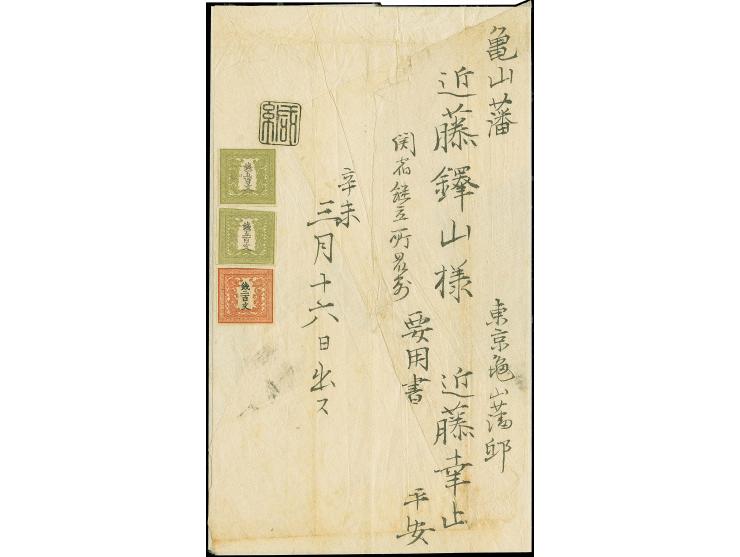
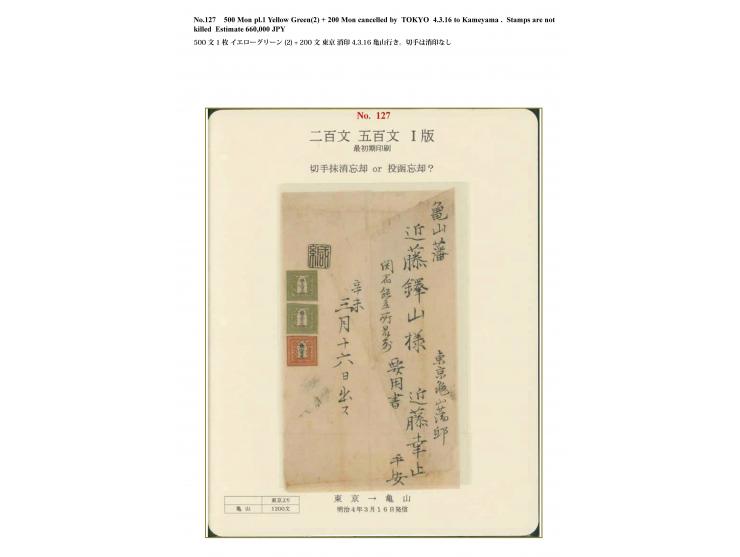
1871, 500 mon yellow green, earliest printing, two singles including position 37, used in combination with 200 mon earliest printing, plate I, bottom 500 and 200 mon, cut into at upper right, uncancelled, but with sender's address in Tokyo and addressed to Kameyama, Ise Province.
Manuscript date "year of the ape 3rd month 16th day", or Meiji 4.3.16 (5 May 1871).
A remarkable early high-franking cover from the opening months of the postal service, of considerable postal-historical interest despite the absence of postal obliteration.
Rate: 1200 mon basic weight, separate area rate of the first rate period.
Reference: Illustrated in 19th century, fig. 16; Dragon Covers, p. 131.


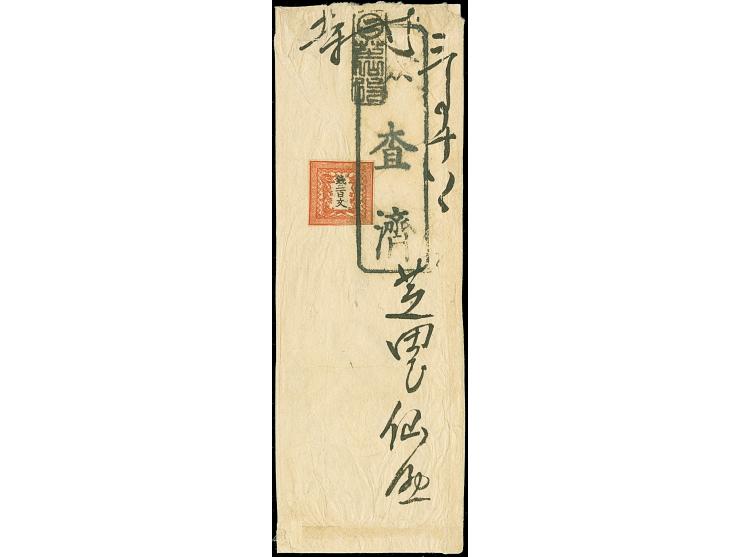
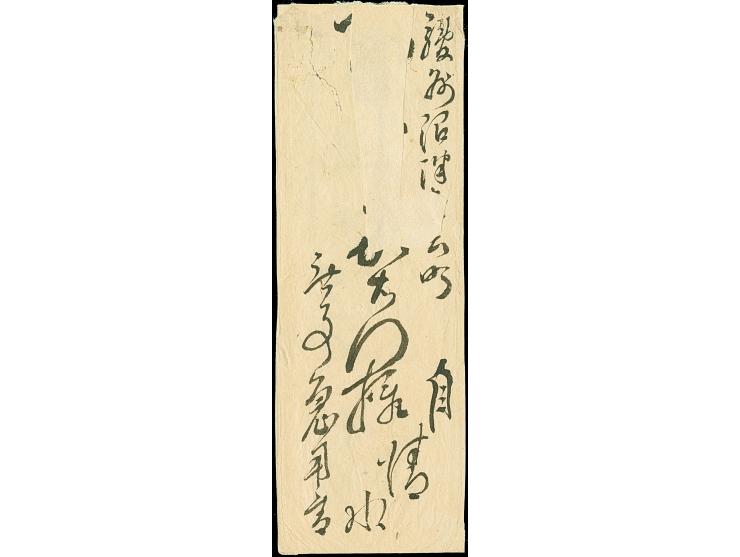
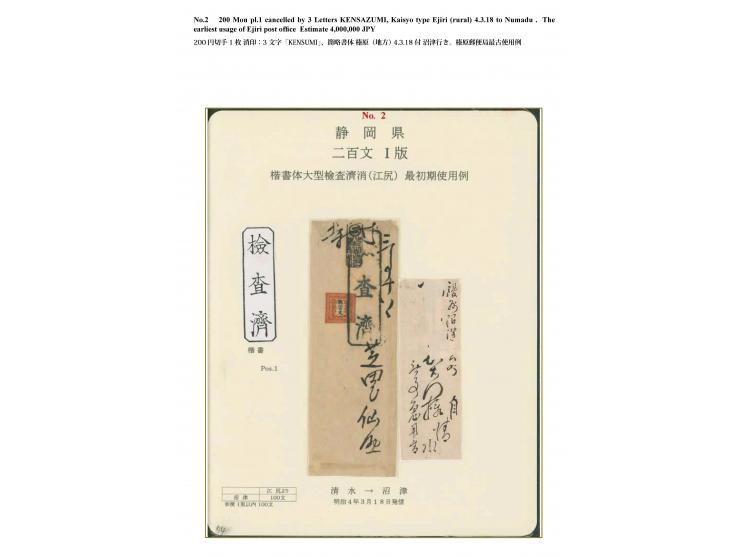
1871, 200 mon vermilion, earliest printing, plate I, position 1, just touched at lower right, tied by a large "Kensazumi" handstamp in regular script (kaisho) on the reverse of a cover from Ejiri to nearby Numazu.
Manuscript dateline (Meiji 4) 3.18, corresponding to 7 May 1871 (Gregorian).
An important early usage, representing the earliest recorded application of the large Kensazumi handstamp from Ejiri. The clarity of the strike and the positional significance of the adhesive further enhance the desirability of this cover within the classic Dragon issue postal history. A well-preserved and highly presentable example.
Rate: 100 mon basic rate plus an additional 100 mon for delivery beyond 2 ri outside the standard delivery circuit, yet within 1 ri under kobin regulations; separate area rate of the first rate period.
Reference: Illustrated in Gallery, Vol. 2, p. 2; Dragon Covers, p. 5.


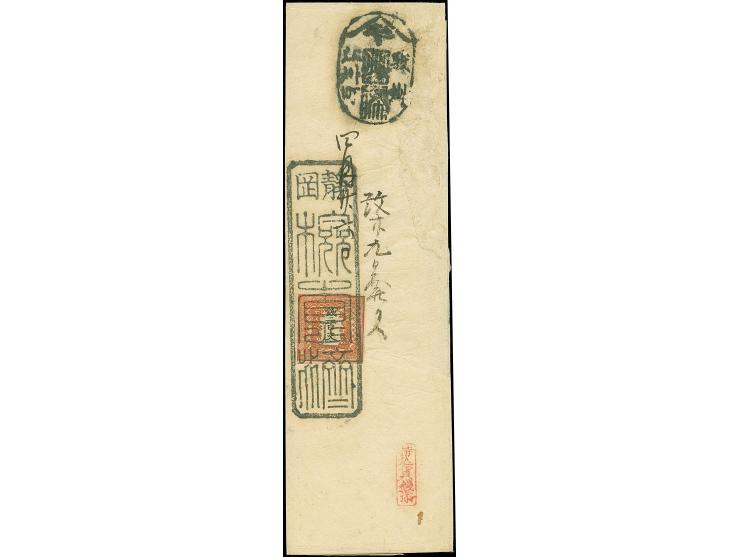
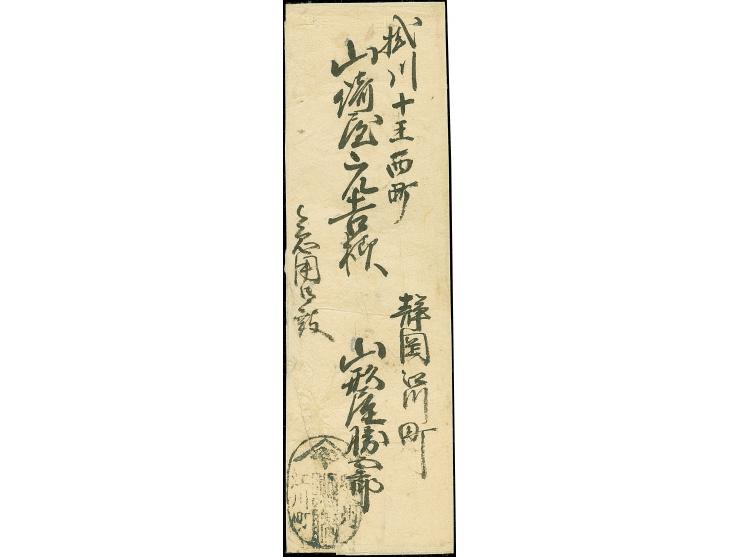
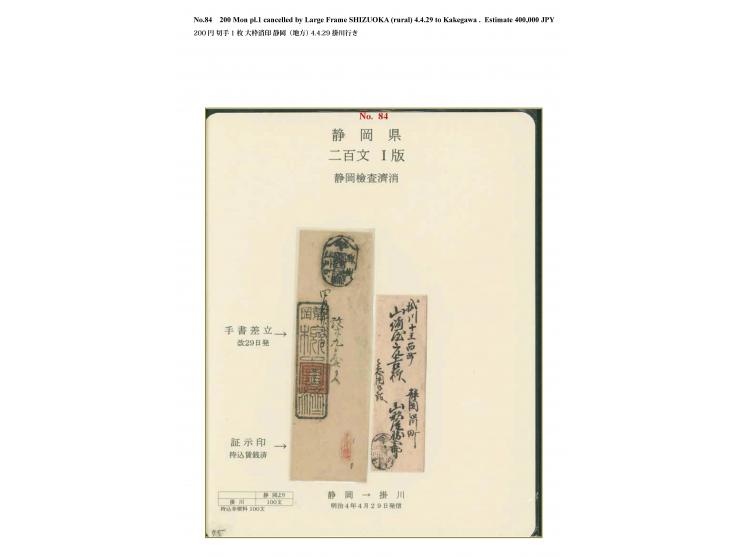
1871, 200 mon, early printing, plate I, position 21, slightly oxidised, tied by a clear strike of large "Shizuoka Kensazumi" of Shizuoka, Suruga Province, to the reverse of a cover to Kakegawa, Totomi Province.
Alongside dateline "4th month 26th day" and official manuscript "dispatched 29th day", or Meiji 4.4.29 (17 June 1871). At bottom right also showing vermilion framed "mochikomi chinsen zumi", meaning "carry-on fee settled".
A highly interesting and desirable early cover, distinguished by this rare instructional marking relating to onward courier conveyance.
Rate: 100 mon basic rate, separate area fee plus 100 mon kobin fee for final delivery by courier = 200 mon, first rate period.
Reference: Illustrated in Dragon Covers, p. 11.


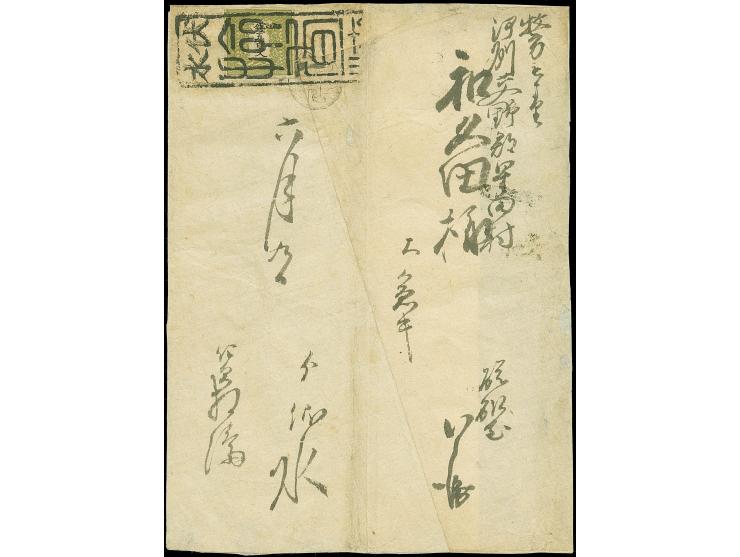
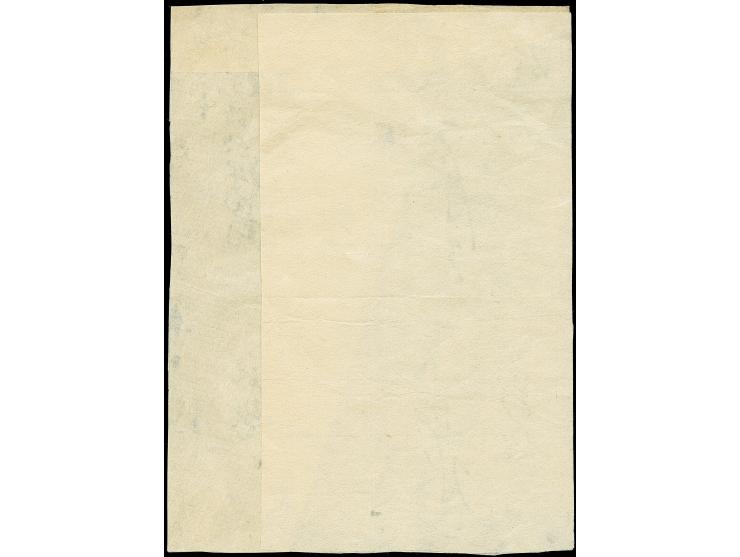
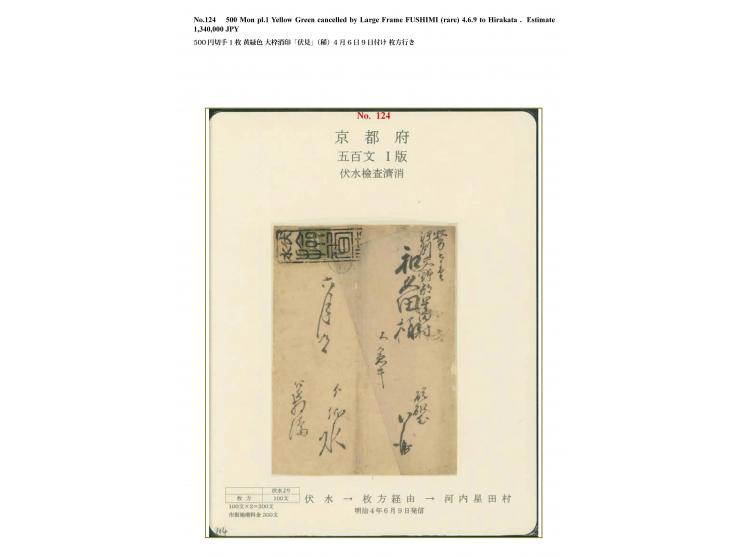
1871, 500 mon yellow green, earliest printing, plate I, position 10, tied by large "Fushimi Kensazumi" to the reverse of a cover via Hirakata, Kawachi Province, to Hoshidamura, Kawachi Province.
Manuscript dateline 6th month 9th day of Meiji 4 (26 July 1871).
The earliest recorded cover bearing the large Fushimi Kensazumi, and an important early postal-history usage of the 500 mon earliest printing.
Rate: 100 mon basic weight plus additional charge for kobin area (within 3 ri square) 400 mon, separate area rate of the first rate period.
Reference: Illustrated in Large Placename Kensazumi (1979), p. 52; Dragon Covers, p. 15.


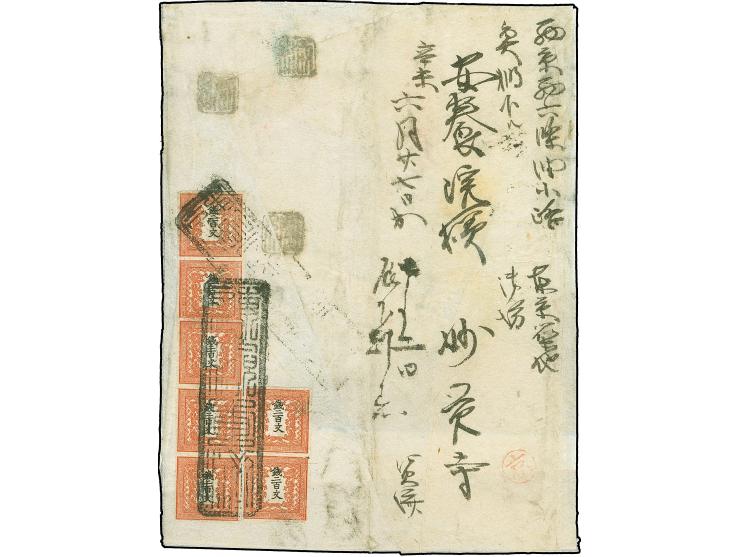
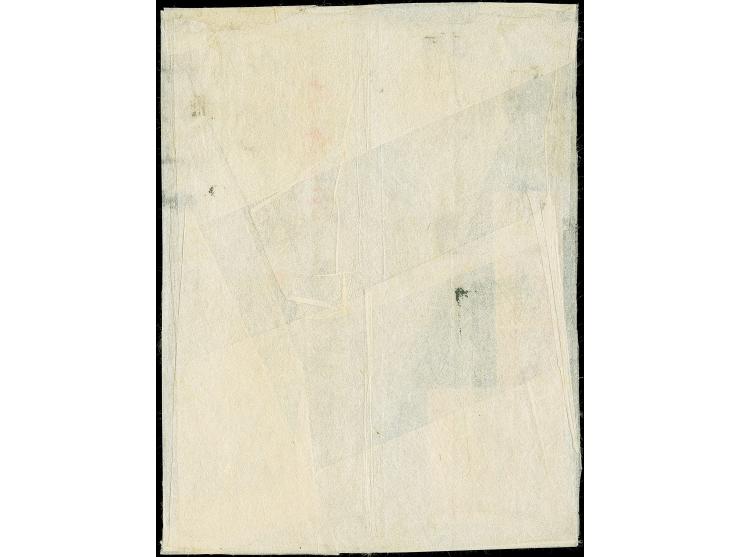
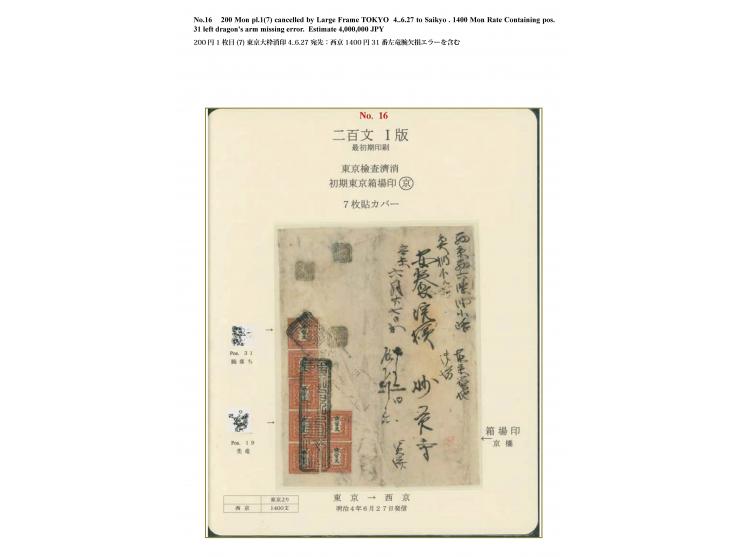
1871, 200 mon vermilion, earliest printing, plate I, comprising vertical pair positions 31-39, strip of three positions 11-19-27, and at right vertical pair positions 32-40 (with official pinhole at upper right), tied by two strikes of large "Tokyo Kensazumi" to the reverse of a cover to Saikyo.
The franking includes the major variety at position 31, "left dragon arm missing", as well as the variety at position 19, "right dragon hair missing". Manuscript dateline of Meiji 4, year of the goat, 6th month 27th day (13 August 1871).
Also showing a red circular framed hakoba-in "kyo" (京) of Kyobashi, a letter box mark used only during Meiji 4. The major variety at position 31 was retouched at an early stage (JSCA 3v-1-31; catalogue value loose ¥1.2 million).
A spectacular seven-stamp franking on cover, uniting major plating interest, scarce postal markings, and great exhibition value.
Rate: 1400 mon basic weight cover, Tokyo to Saikyo, separate area rate of the first rate period.
Reference: Illustrated in Dragon Covers, p. 18.


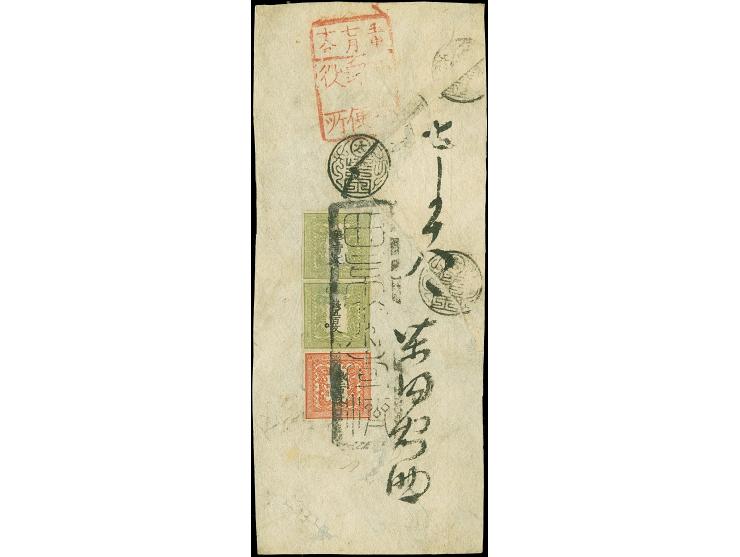
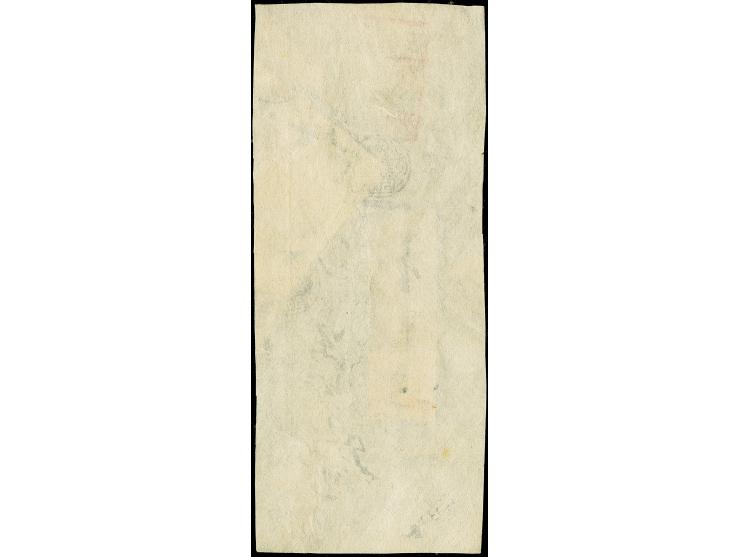
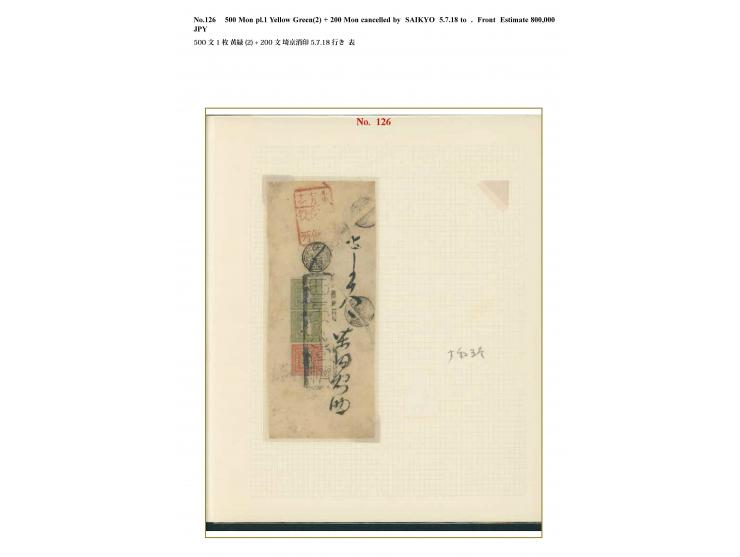
1871, 500 mon yellow green, earliest printing, a vertical pair, plate I, upper 500 mon with point rubbing, used in combination with 200 mon vermilion, plate I, early printing, position 5, tied by large "Saikyo Kensazumi" to large part of cover-reverse.
Vermilion framed "year of the monkey 7th month 18th day / Saikyo postal bureau", or Meiji 4.7.18 (2 September 1871).
A scarce and attractive high-value franking from the first rate period, probably addressed to Fujisawa or Oiso.
Rate: 1200 mon basic weight, perhaps to Fujisawa or Oiso, separate area rate of the first rate period.


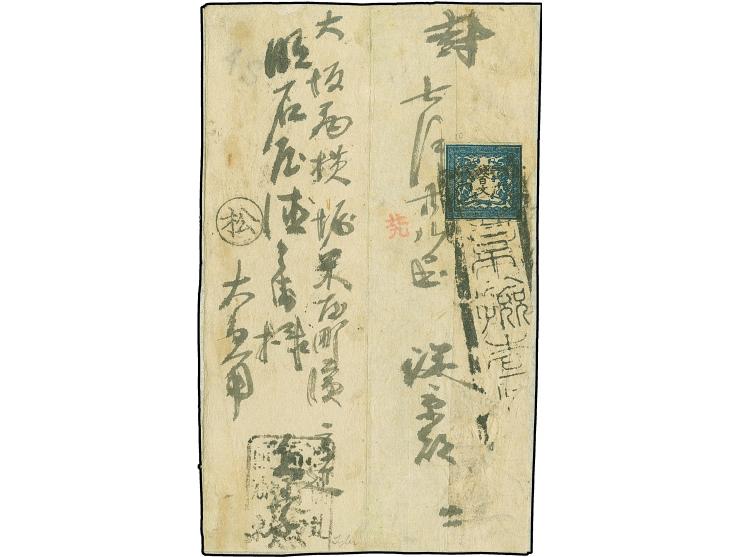
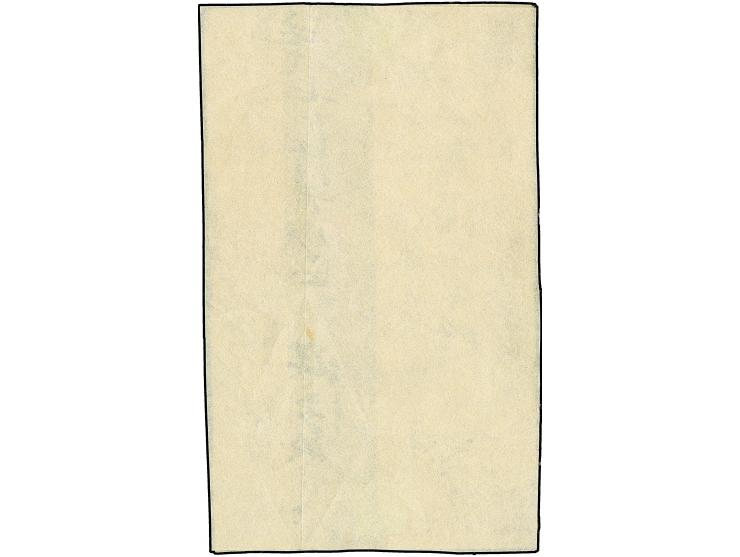
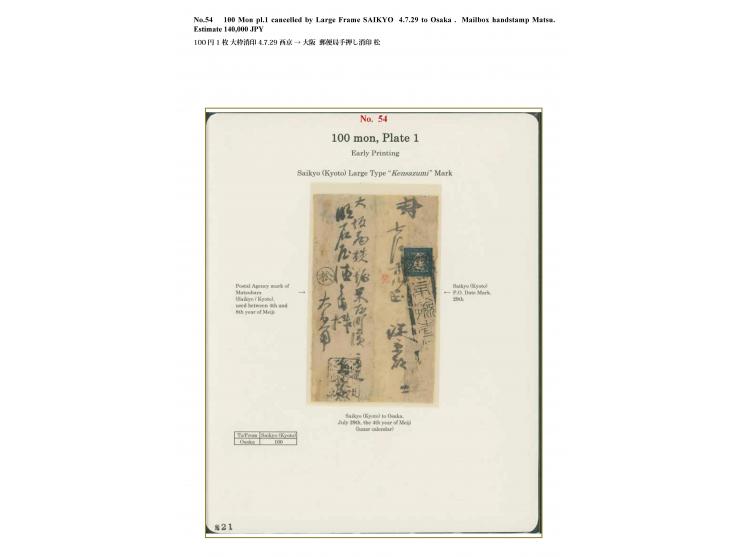
1871, 100 mon blue, plate I, position 36, tied by large "Saikyo Kensazumi" to the reverse of a cover to Osaka.
Manuscript dateline "7th month 29th day" of Meiji 4.7.29 (13 September 1871). Also showing vermilion vertical frameless "29" day marking of Saikyo, together with circular framed hakoba-in "matsu" (松) of Matsubara letter box.
A desirable early Saikyo cover, additionally enhanced by the scarce Matsubara letter box marking.
Rate: 100 mon basic rate, separate area rate of the first rate period.
Reference: Illustrated in Dragon Covers, p. 21.


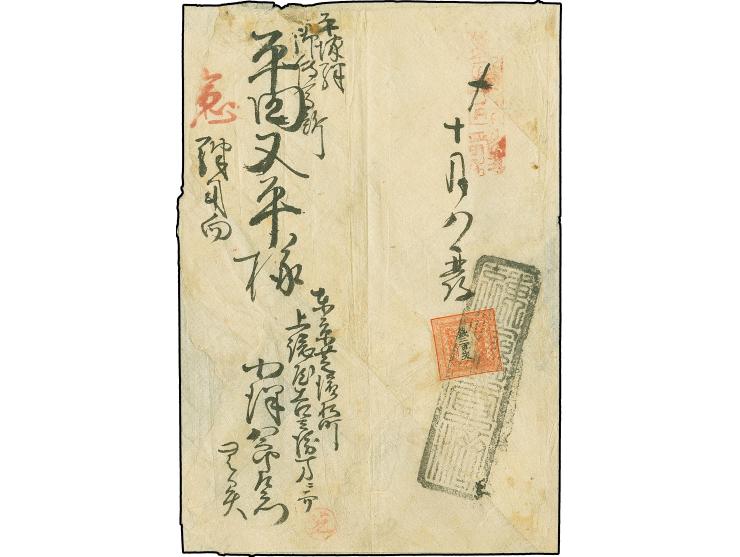
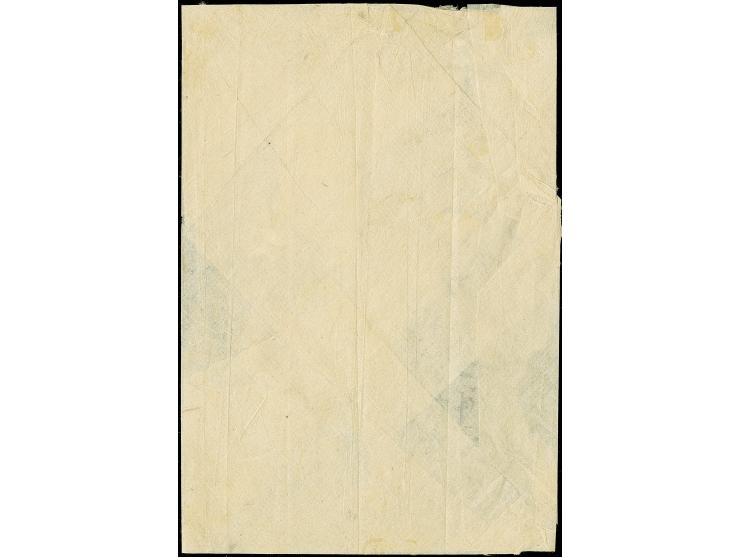
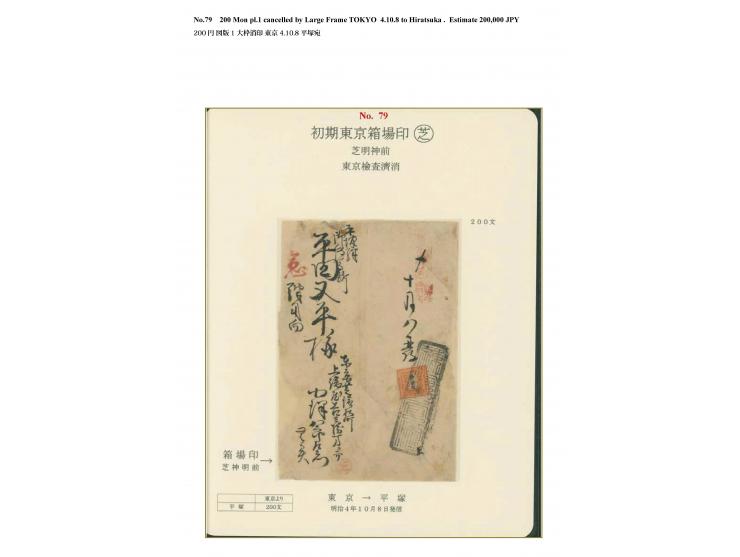
1871, 200 mon vermilion, early printing, plate I, position 32, tied by a full strike of large "Tokyo Kensazumi" to the reverse of a cover to Hiratsuka, Sagami Province.
Manuscript dateline "10th month 8th day", or Meiji 4.10.8 (20 November 1871). On the address side at foot, vermilion circular framed hakoba-in "Shiba" (芝) of Shiba Shinmeimae letter box.
A scarce and appealing first-period cover, especially desirable for the fine full strike of the large Tokyo Kensazumi and the rare Shiba letter box marking.
Rate: 200 mon basic weight, separate area rate of the first rate period.
Reference: Illustrated in 19th century, fig. 8.


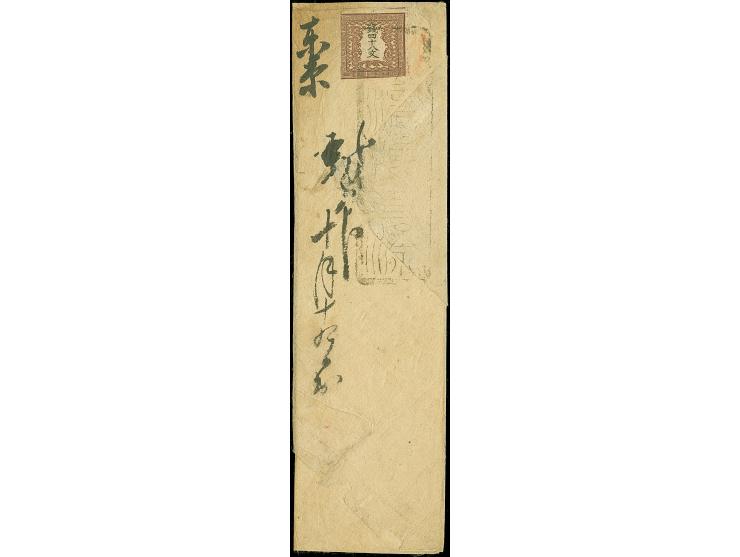
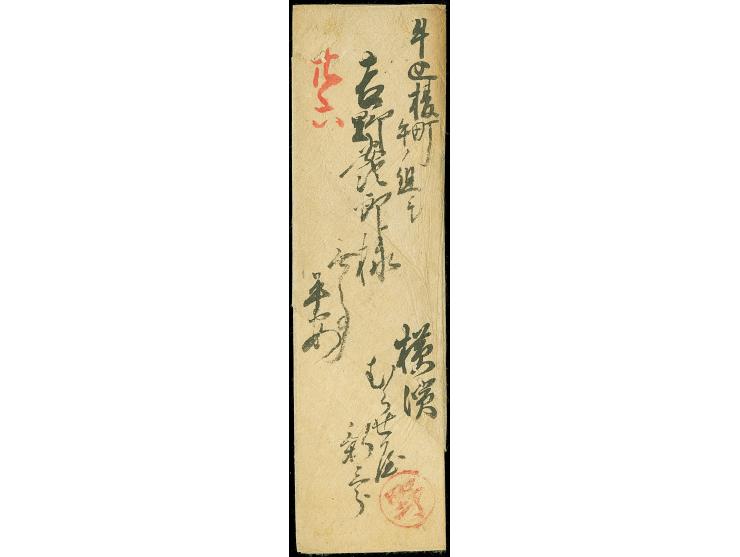
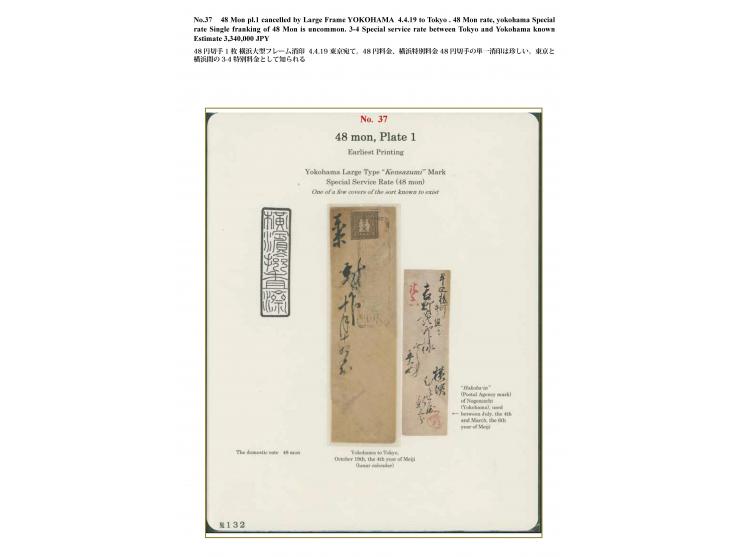
1871, 48 mon brown, earliest printing, plate I, position 34, frame cut at left, bottom luped margin to touched, otherwise large margins, tied by large "Yokohama Kensazumi" to the reverse of a cover with manuscript dateline "10th month 19th day", Meiji 4.10.19 (1 December 1871), from Yokohama to Tokyo-Ushigome.
On the address side at lower right, vermilion circular framed hakoba-in "No" (野) of the Nogemachi letter box, recorded in use from Meiji 4.7 to Meiji 6.3 (1871–73).
This special rate applied only between Yokohama and Tokyo. It was set deliberately low in an effort to displace the private courier services then operating on the route. At the time, the local postal rate remained 100 mon; from the second rate period onward, beginning Meiji 4.12.5, the rate between the two places was standardised at 100 mon.
The scarcest of all 48 mon single frankings of Meiji 4, of which only a handful are recorded.
Rate: Yokohama-Tokyo special in-between rate of 48 mon per 2 momme weight, period Meiji 4.8 to 4.12.4 (19th Century, commentary volume, pp. 57/60).
Reference: Illustrated in Dragon Covers, p. 132.


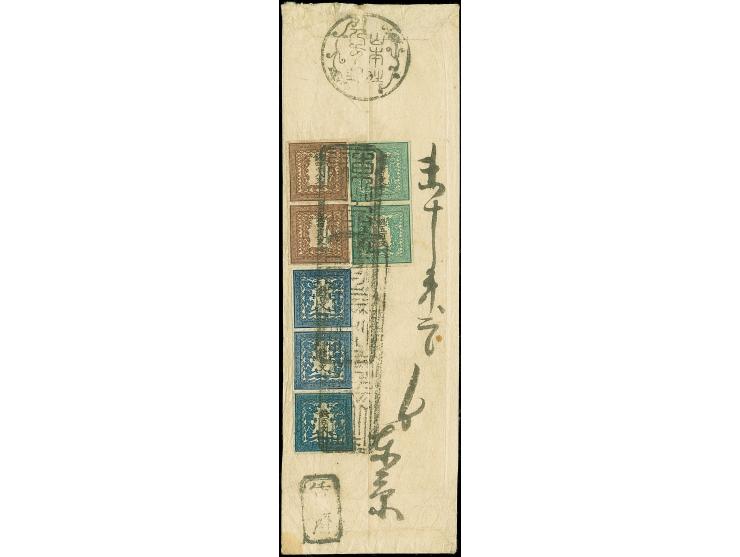
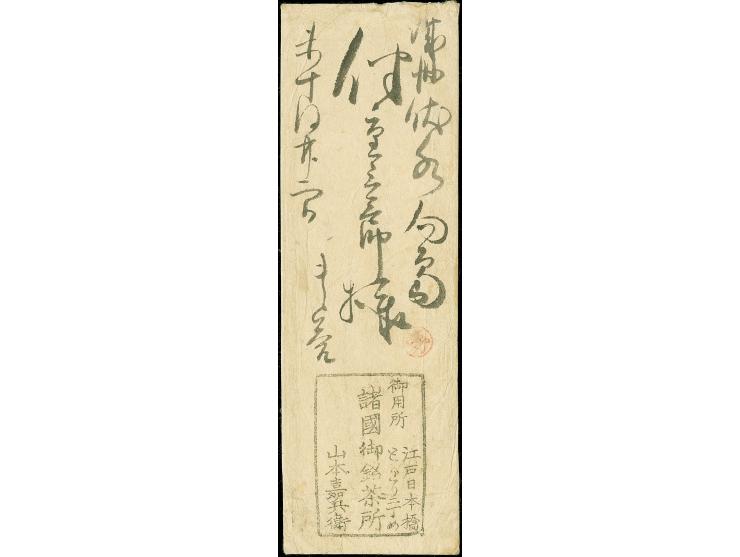
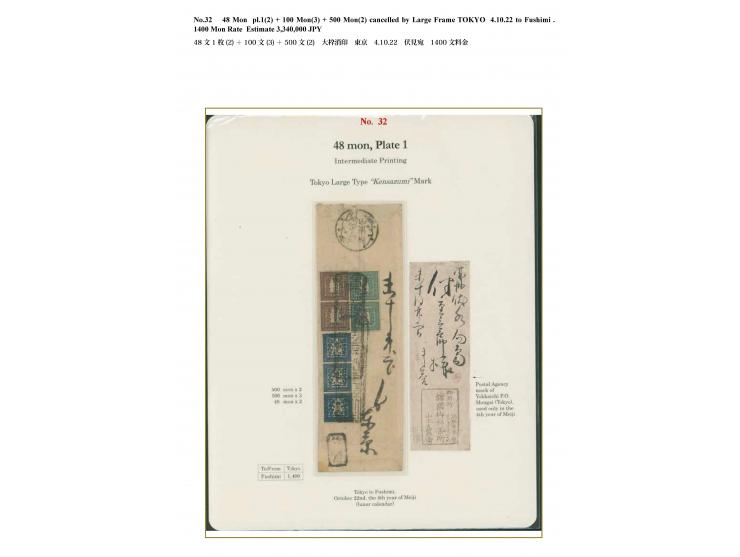
1871, 48 mon brown, plate I, a vertical pair, positions 20-28; 100 mon blue, plate I, vertical pair positions 3-11 and single in a different shade, position 17; together with 500 mon bluish green, plate I, middle period printing, a vertical pair, positions 17-25, all tied by two strikes of large "Tokyo Kensazumi" to the reverse of a cover to Fushimi, Yamashiro Province.
Manuscript dateline on address side left, "year of the goat 10th month 22nd day", or Meiji 4.10.22 (4 December 1871). Also showing a vermilion circular framed hakoba-in "yu" (郵), the letter box mark of the posting box outside the gates of the Tokyo-Yokkaichi postal bureau, the first main post office of Tokyo. This hakoba is recorded from Meiji 4.4 to 4.11 only.
A most impressive and visually striking three-colour mon franking, additionally distinguished by this scarce Tokyo letter box marking.
Rate: 1400 mon to Fushimi, separate area rate of the first rate period.


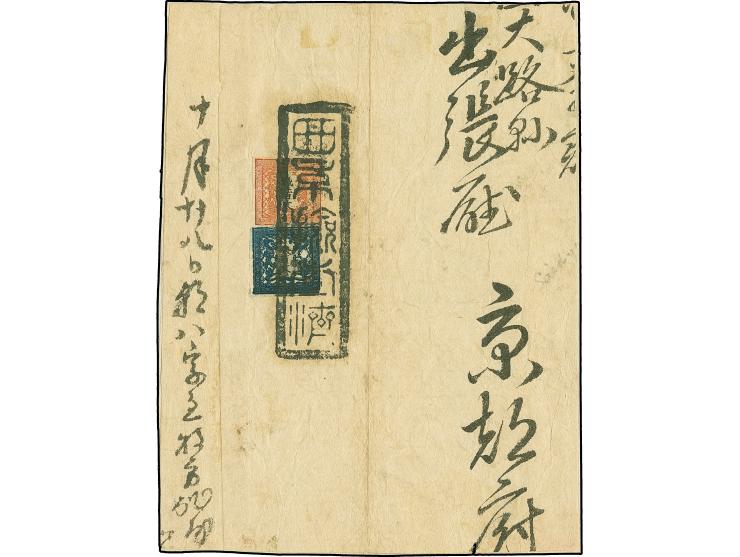
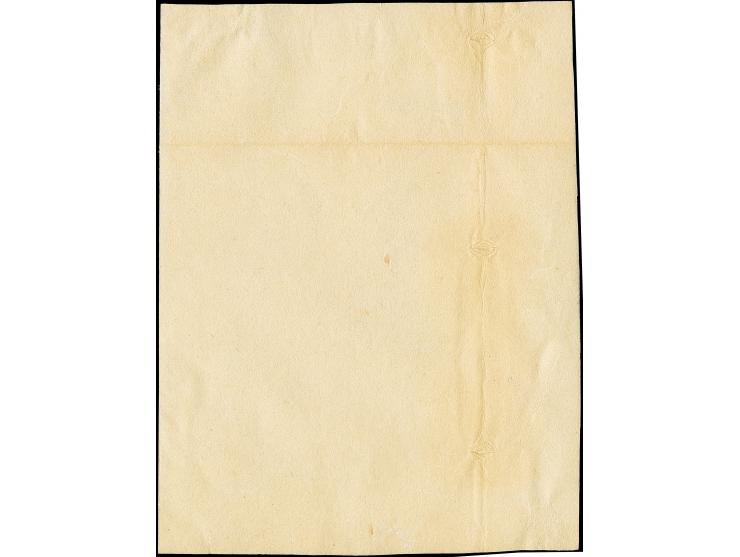
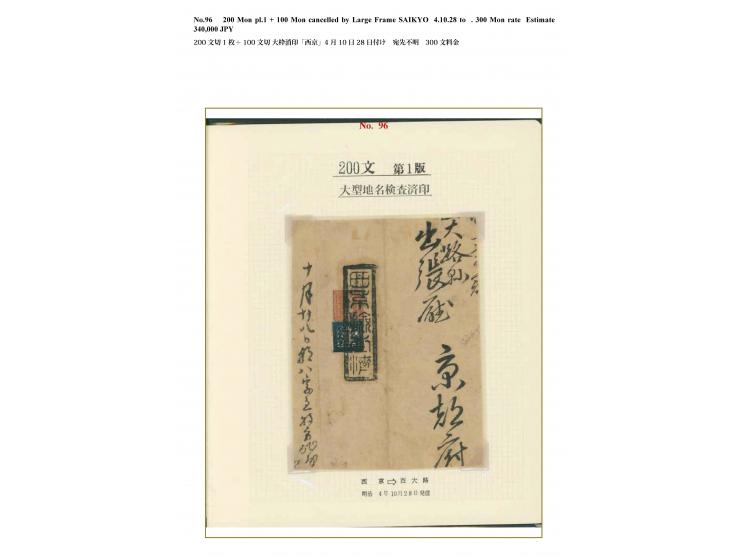
1871, 100 mon dark blue, early printing, plate I, position 37, with positional pinhole, right frameline partly touched to cut in, used in combination with 200 mon vermilion, late printing, plate I, position 17, slightly oxidised, tied by a clear strike of large "Saikyo Kensazumi" to the reverse of a cover, reduced at top right and bottom left, to an unclear destination, probably Kuwana or Yokkaichi.
Sender: Kyoto city administration. Manuscript dateline "10th month 28th day", or Meiji 4.10.28 (20 December 1871).
A scarce official mixed franking from the Kyoto administration, with strong postal-historical appeal.
Rate: 300 mon basic weight, separate area rate of the first rate period.