
Auction Detail
The Yasushi Tejima Collection Japan Dragon Stamps Part 1


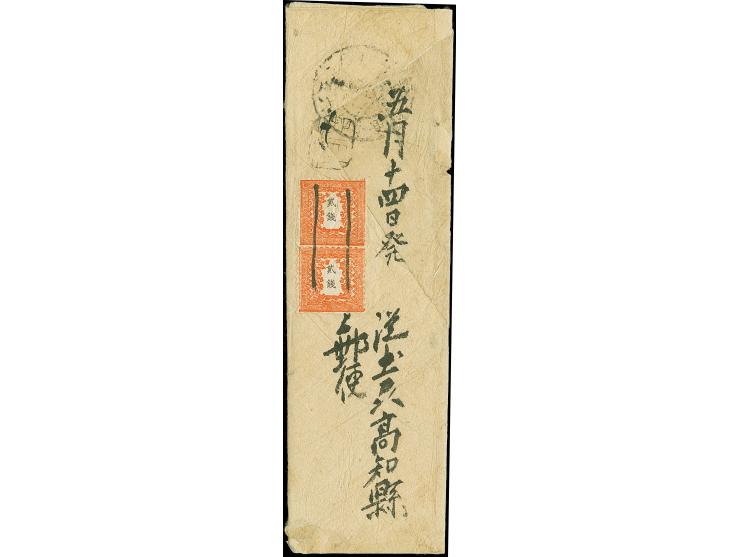
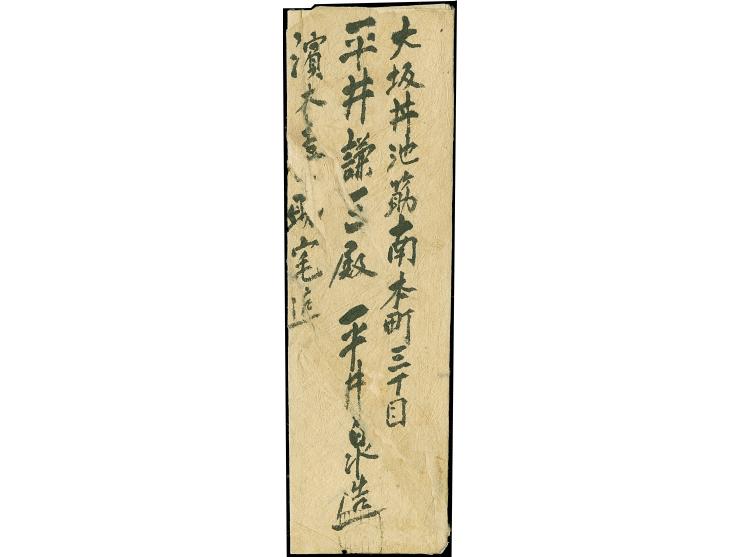
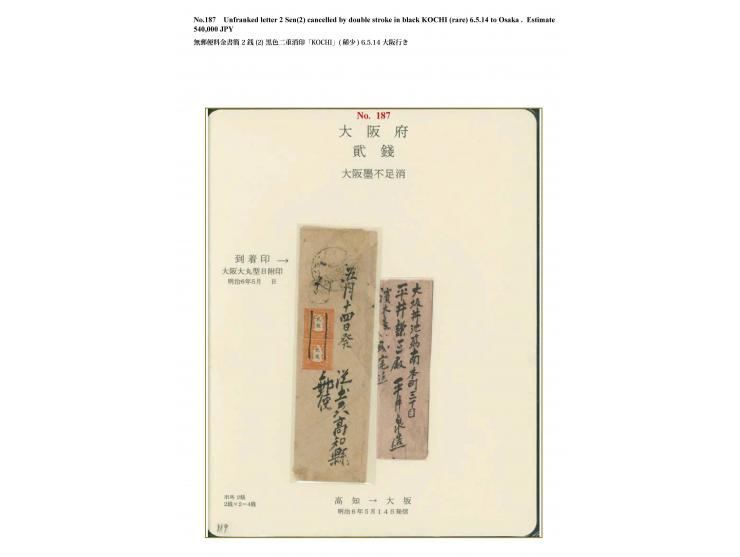
1872, 2 sen vermilion vertical pair, cancelled by black brush strokes on an unpaid cover, address side with small insect holes, inbound to Osaka from Kochi.
Manuscript date "5th month 14th day dispatched". Arrival large double-circle "Osaka Meiji 6.5..." (May to June 1873).
A scarce and highly interesting postage due usage, with the 2 sen pair applied to collect doubled unpaid postage under the unified tariff.
Rate: Letter 2 sen, unpaid and therefore doubled = 4 sen, nationwide tariff from Meiji 6.4.1.


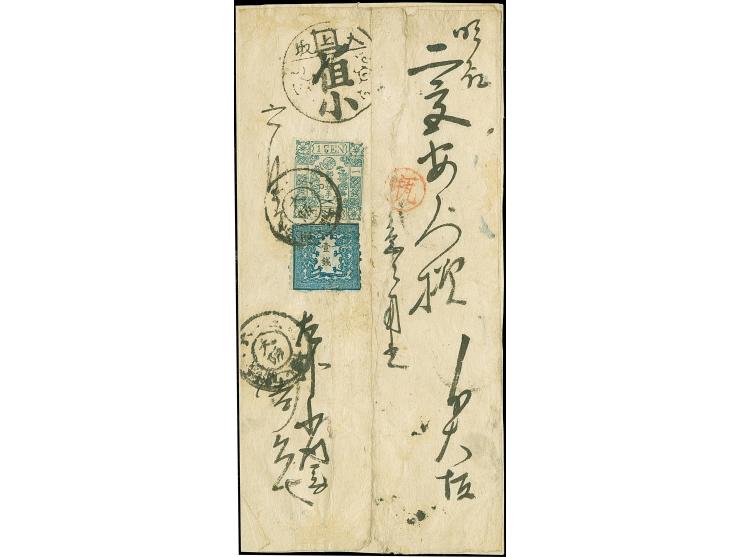
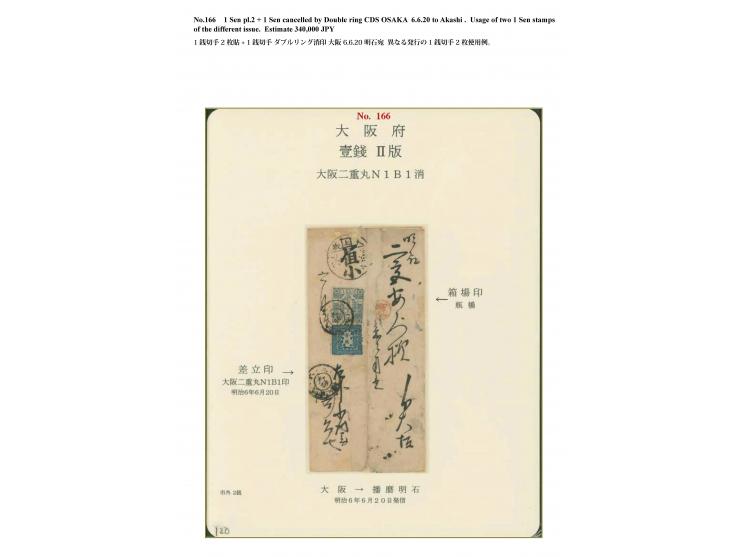
1872, 1 sen blue, plate II, used in combination with Cherry Blossom native paper 1 sen blue, tied by double-circle N1B1 "Osaka 6.6.20" (20 June 1873) on a cover from Osaka to Akashi, Harima Province.
Also showing red circular framed hakoba-in "kame" (瓶) of Kamebashi letter box.
A scarce and attractive "same denomination" mixed franking, further enhanced by the uncommon Kamebashi letter box marking.
Rate: Nationwide letter, basic weight = 2 sen, unified standard rate of the third rate period from Meiji 6.4.1.
Reference: Illustrated in Dragon Covers, p. 105.


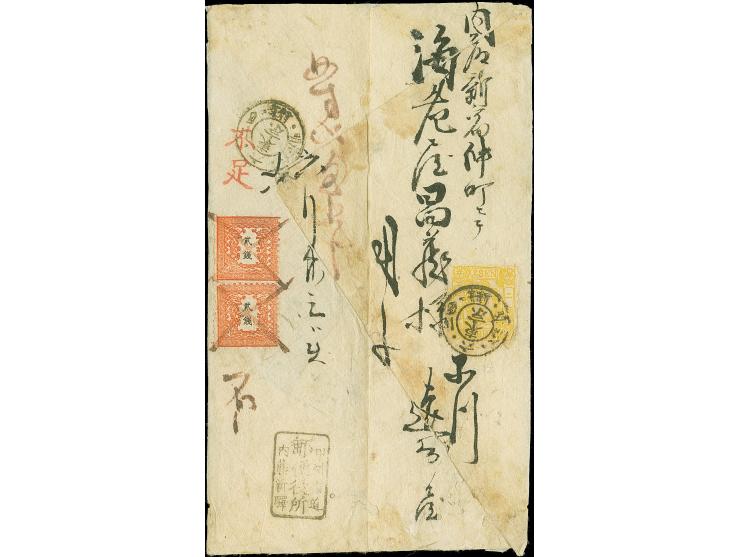
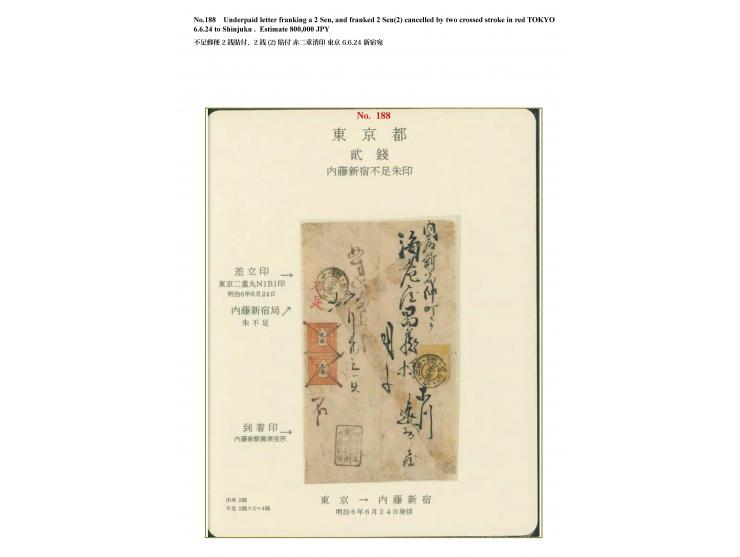
1872, 2 sen vermilion, a vertical pair, cancelled by red brush strokes as postage due on an overweight cover bearing Cherry Blossom native paper 2 sen yellow, tied by double-circle N1B1 "Tokyo Meiji 6.6.24" (24 June 1873), addressed to Naitoshinjuku.
Also showing framed non-standard "Koshukaido / postal bureau / Naitoshin station" and red "insufficient" marking of Naitoshinjuku.
A highly unusual and desirable postage due cover, combining Dragon and Cherry Blossom issues in a rare mixed-franking deficiency usage.
Rate: Letter double weight = 4 sen; unpaid deficiency of 2 sen doubled = 4 sen, nationwide tariff from Meiji 6.4.1.
Reference: Illustrated in Dragon Covers, p. 177.


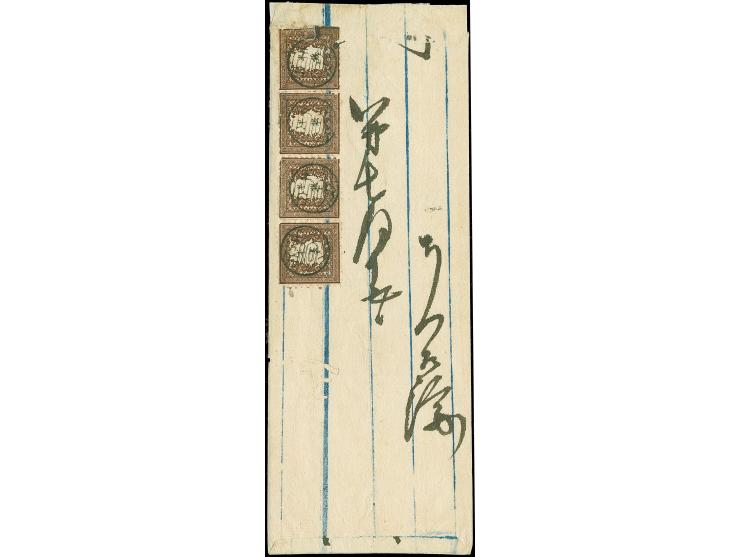
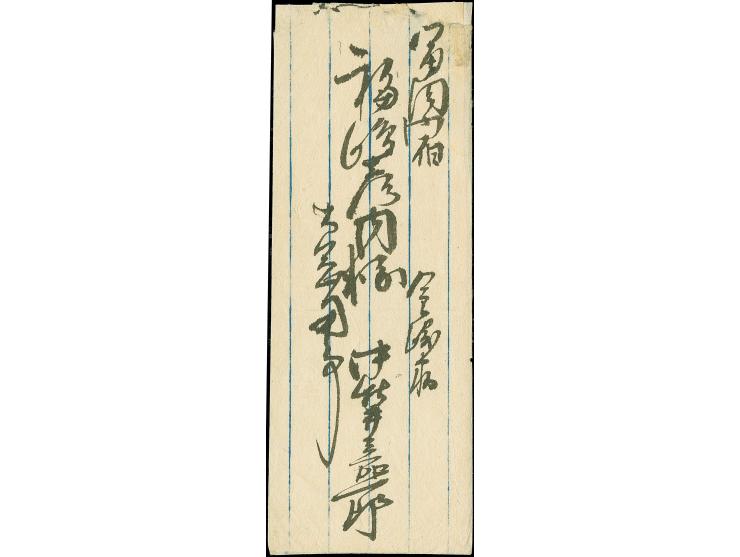
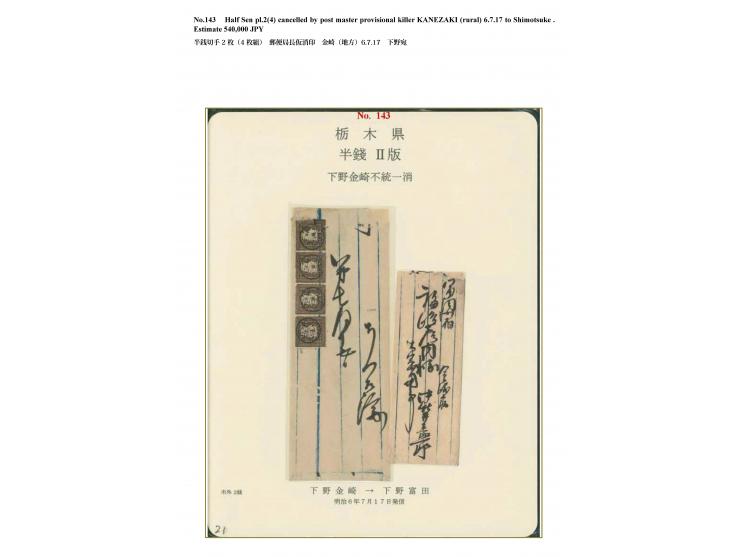
1872, 1/2 sen brown, plate II, early printing, a horizontal strip of four, positions 5-6-7-8, upper stamp faults, each stamp with full strike of a circular framed non-standard tensho-style marking, probably the postmaster's seal of Kanazaki, Shimotsuke Province, on the reverse of a cover, a few insect holes not affecting the adhesives, to Tomita within the same province.
Manuscript dateline "7th month 17th day dispatched" of Meiji 6.7.17 (17 July 1873). The earliest recorded cover from Kanazaki.
A rare and highly attractive provincial cover, notable for the repeated full strikes of this probable postmaster seal on a handsome strip of four.
Rate: Letter nationwide = 2 sen, unified rate period from Meiji 6.4.1.
Reference: Illustrated in Dragon Covers, p. 178.


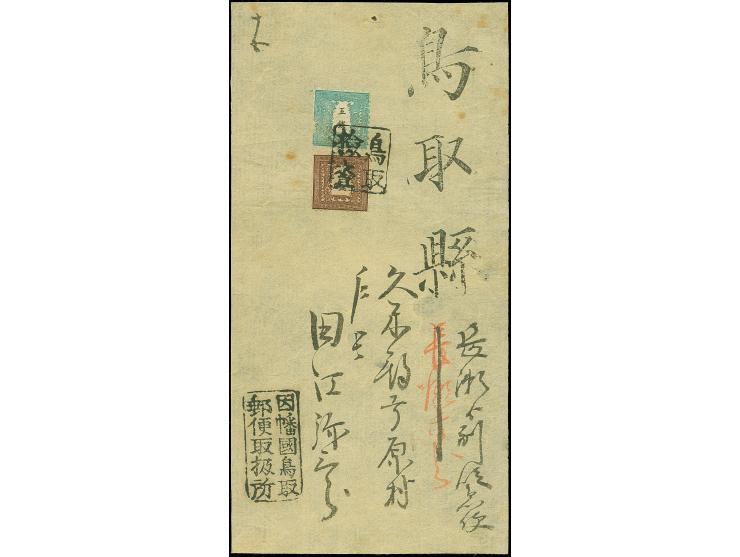
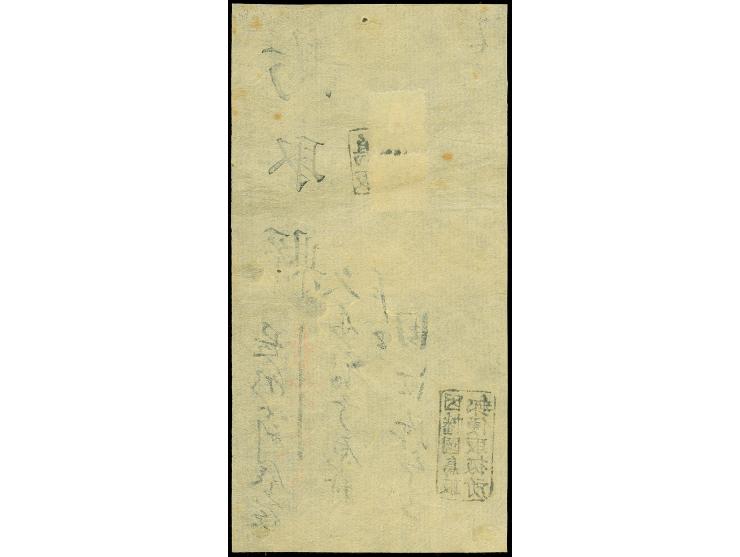
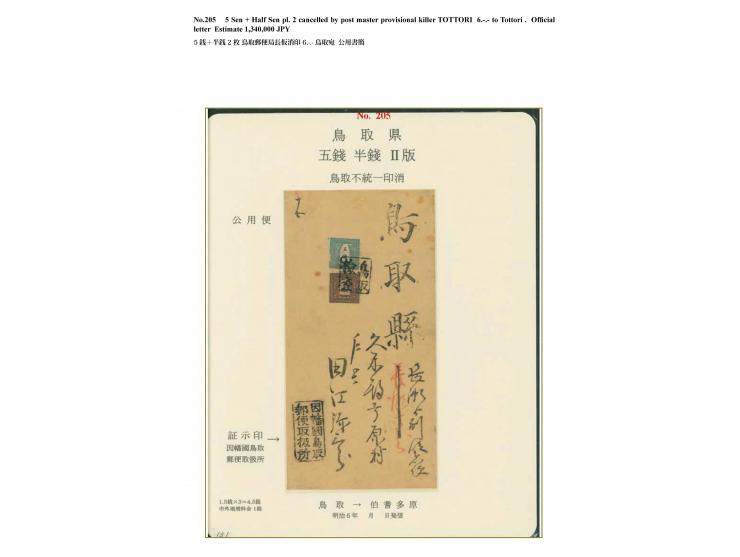
1872, 5 sen and 1/2 sen Plate II, tied by framed non-standard "Tottori Ken" to an official wrapper to Tawara, Hoki Province.
At lower left, framed non-standard "Inaba Province Tottori / postal receiving and handling agency". At upper right, imprinted "Tottori Prefecture" of the sending authority.
A highly unusual and important official wrapper, showing the rare special printed-matter rate in a striking mixed franking.
Rate: Postal special rate of 1 1/2 sen per 16 momme for bound official printed matter; triple weight = 4 1/2 sen, plus 1 sen to destination outside the delivery circuit = 5 1/2 sen. Rate in force Meiji 6.4.1 to 6.12.31 (1 April to 31 December 1873).
Reference: Illustrated in Dragon Covers, p. 112.


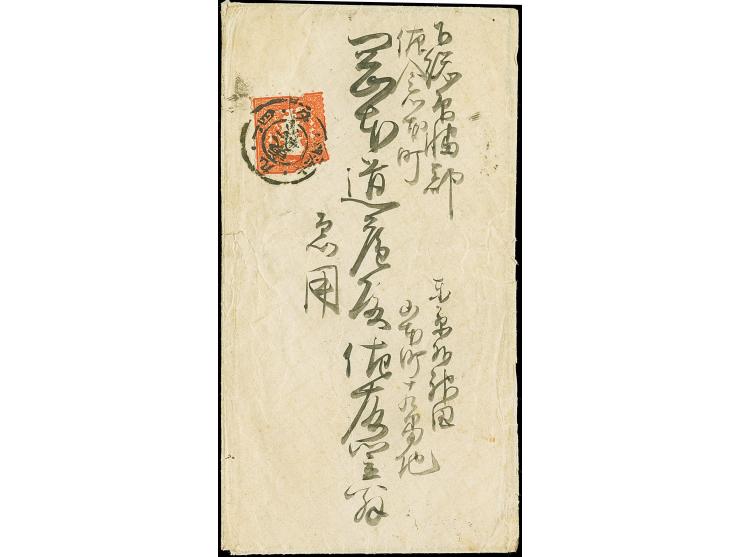
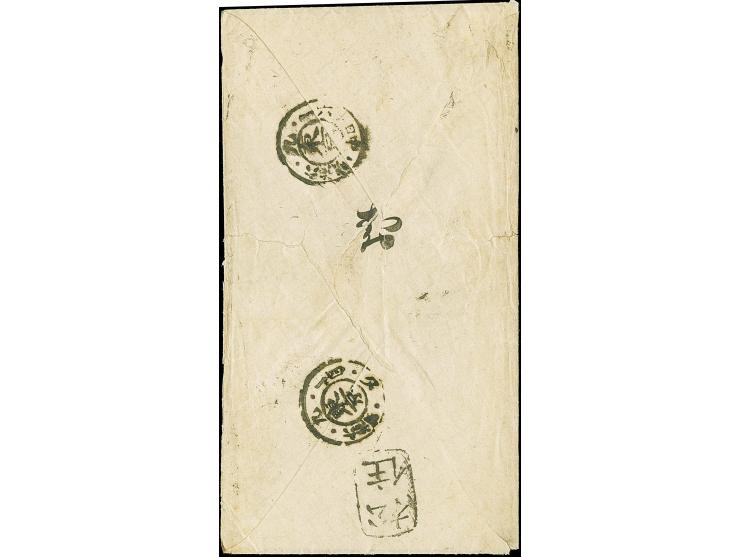
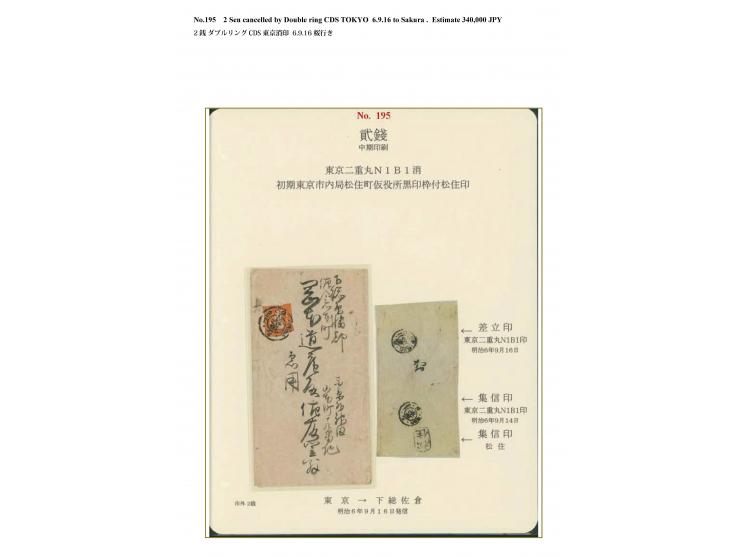
1872, 2 sen vermilion, middle period printing, tied by double-circle N1B1 "Tokyo 6.9.14" (14 September 1873) to a cover to Sakura, Kazusa Province.
On reverse, framed collection mark "Matsuzumi" and dispatch mark N1B1 "Tokyo 6.9.16".
A pleasing and well-marked Tokyo branch-office cover from the unified tariff period.
Rate: Letter 2 sen nationwide, unified tariff from Meiji 6.4.1.
Reference: Illustrated in 19th century, fig. 83.


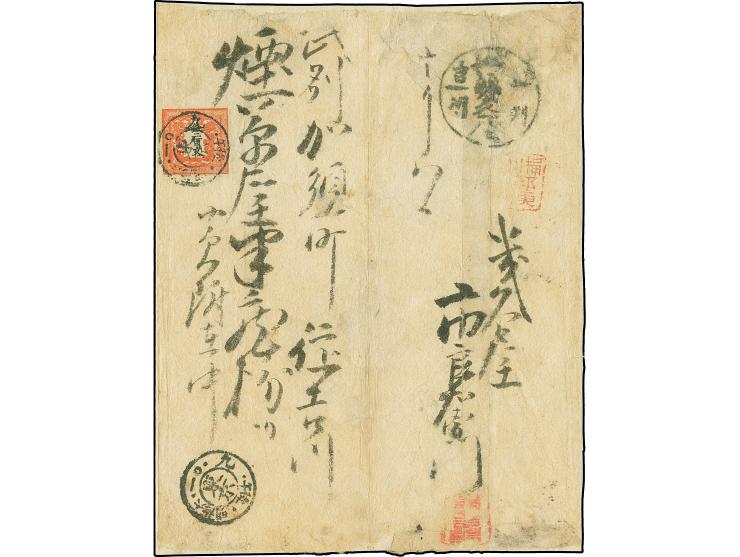
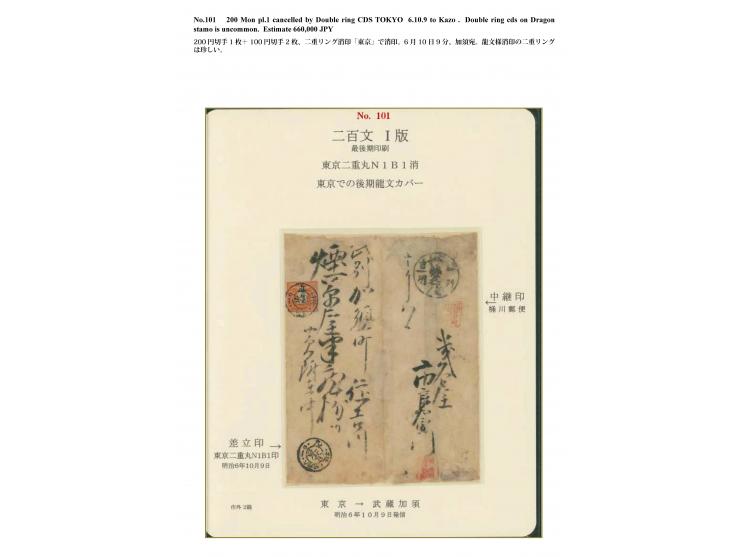
1871, 200 mon, latest printing, plate I, tied by double-circle type N1B1 "Tokyo Meiji 6.10.9" (9 October 1873) to a cover to Kazo, Musashi Province.
The standard double-circle type is uncommon on Dragon stamps. On reverse, transit framed vermilion "Okegawa yubin" of Okegawa post office. A notably late Dragon usage from Tokyo.
Rate: 2 sen, basic weight inland cover of the unified rate period from Meiji 6.4.1.
Reference: Illustrated in 19th century, fig. 83; Dragon Covers, p. 181.


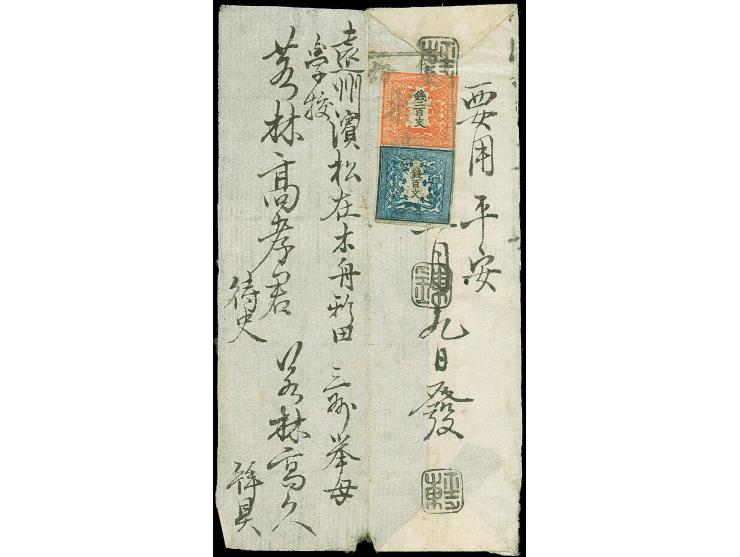
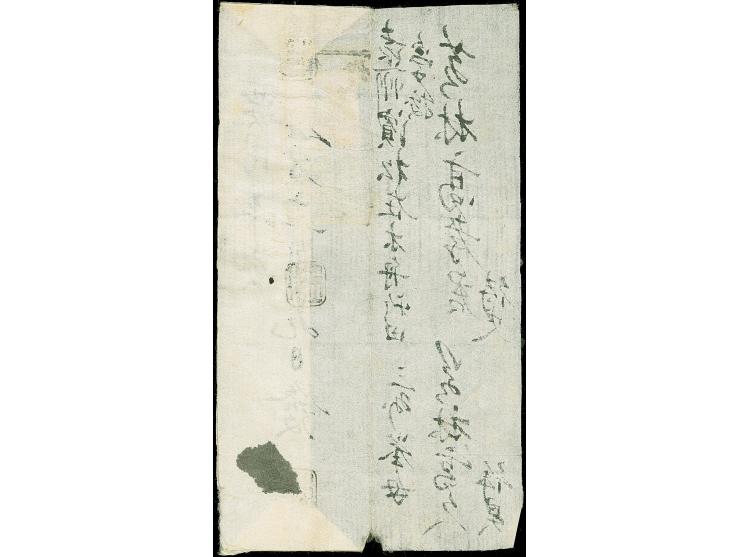
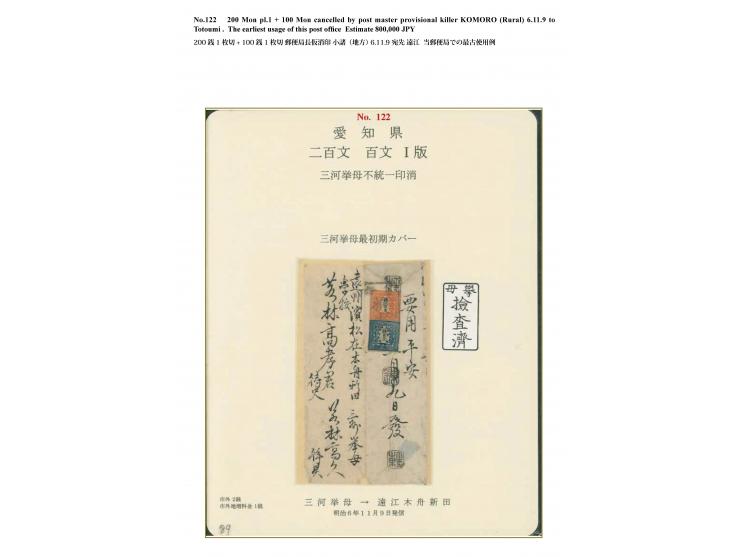
1871, 100 mon blue, plate I, position 36, and 200 mon vermilion, late printing, plate I, position 27, upper frameline largely luped margin to touched, tied by framed non-standard "Komoro Kensazumi" of Komoro, Mikawa Province, to the reverse of a cover to Hamamatsu, Totomi Province.
Manuscript dateline Meiji 6, 11th month 9th day (9 November 1873).
The earliest recorded cover from Komoro, and a scarce and attractive mixed franking with this rare fancy cancellation.
Rate: Standard letter rate nationwide, basic weight 2 sen, plus 1 sen for despatch to a place outside the postal delivery circuit = 3 sen, unified letter rate from Meiji 6.4.1 onward.
Reference: Illustrated in Dragon Covers, p. 99.


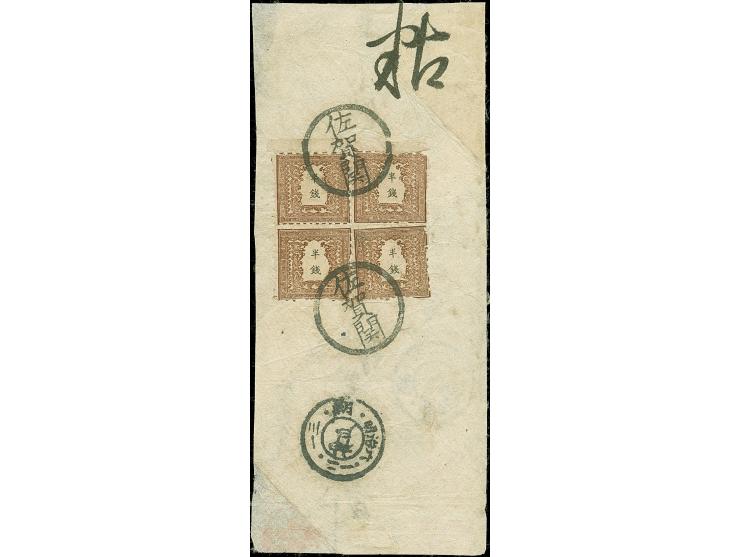
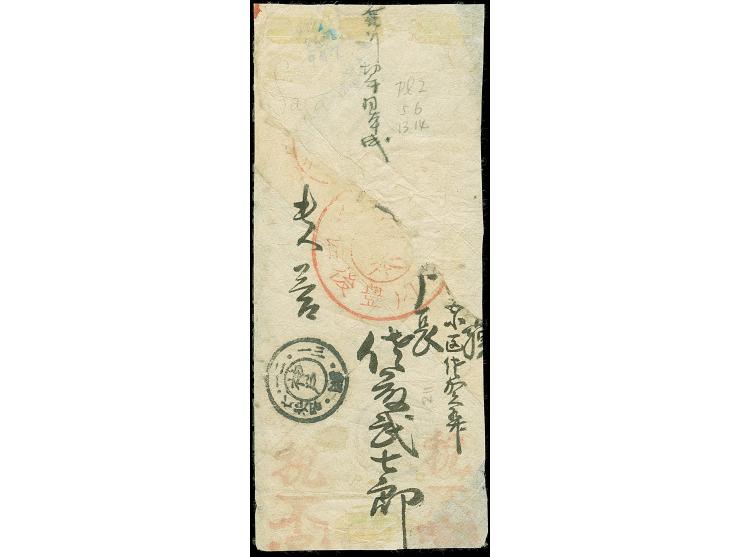
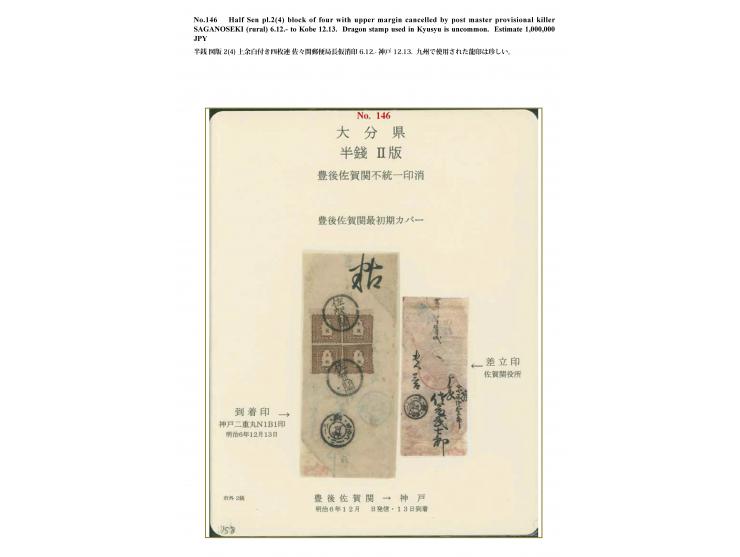
1872, 1/2 sen reddish brown, plate II, a top margin block of four, positions 5-6 / 13-14, tied by two strikes of circular framed non-standard "Saganoseki" of Saganoseki, Bungo Province, to the reverse of a cover, address side incomplete, to Kobe, with arrival double-circle type N1B1 6.12.13 (13 December 1873).
On the address side, two strikes of single-line "postage insufficient", apparently not pursued at Kobe. Dragon usages on Kyushu are uncommon. This is the earliest recorded cover from Saganoseki.
A highly desirable provincial rarity, combining earliest recorded status with uncommon Dragon usage from Kyushu.
Rate: Letter nationwide = 2 sen, unified rate period from Meiji 6.4.1.


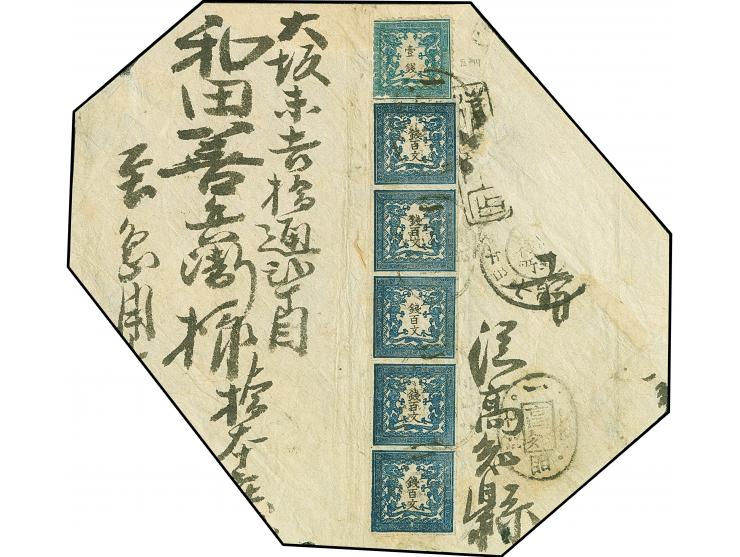
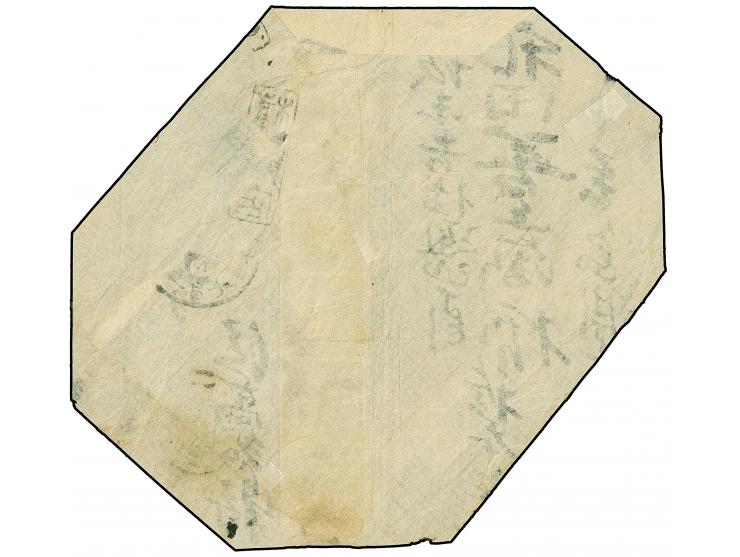
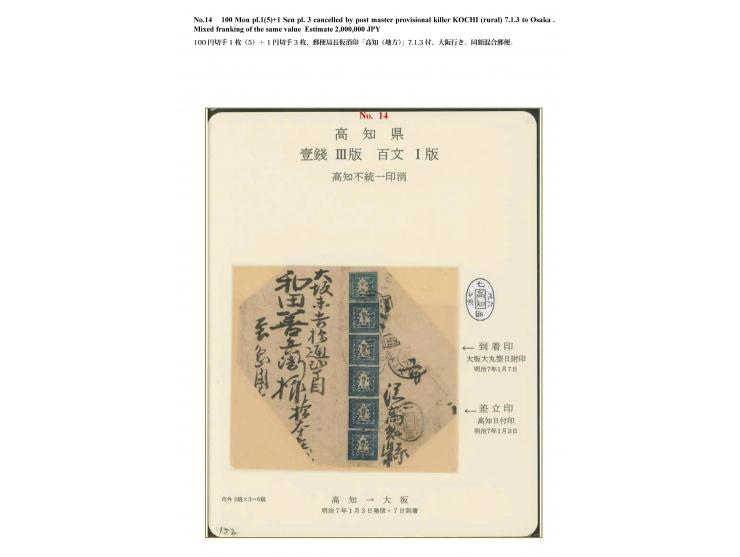
1871/72, 100 mon blue, plate I, position 5, used in combination with 1 sen blue, plate III, both tied by oval non-standard "Kochi Meiji 7.1.3" (3 January 1874) to the reverse of a cover to Osaka, with large double-circle arrival marking of Meiji 7.1.7.
A late and highly unusual usage of the 100 mon issue, made particularly notable by the same-colour, same-denomination mixed franking. Such combinations are seldom encountered and possess strong specialist appeal.
Rate: 6 sen, triple-weight inland cover of the unified rate period from Meiji 6.4.1 (1 April 1873).
Reference: Illustrated in Dragon Covers, p. 182.


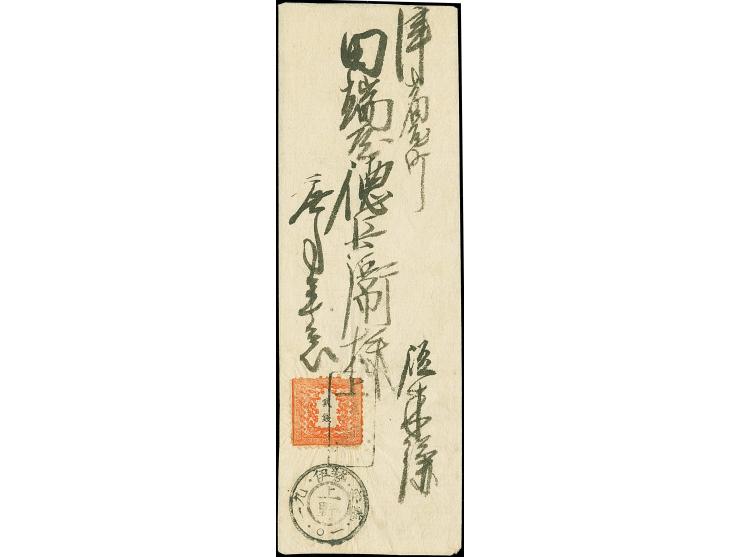
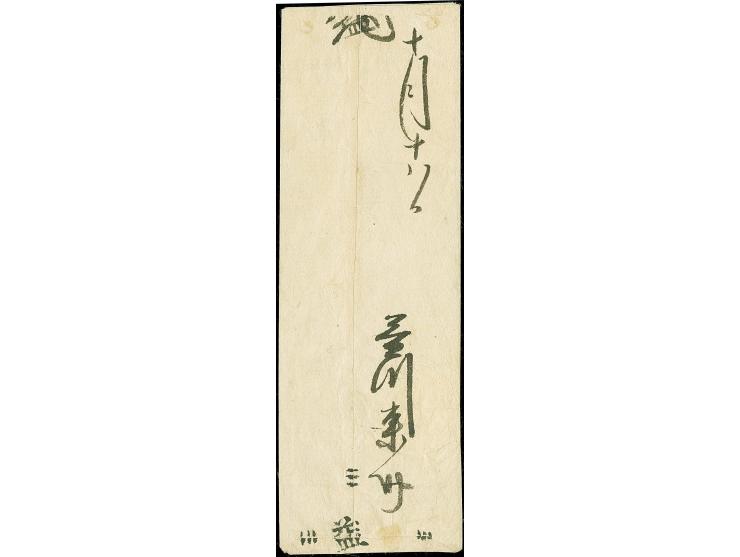
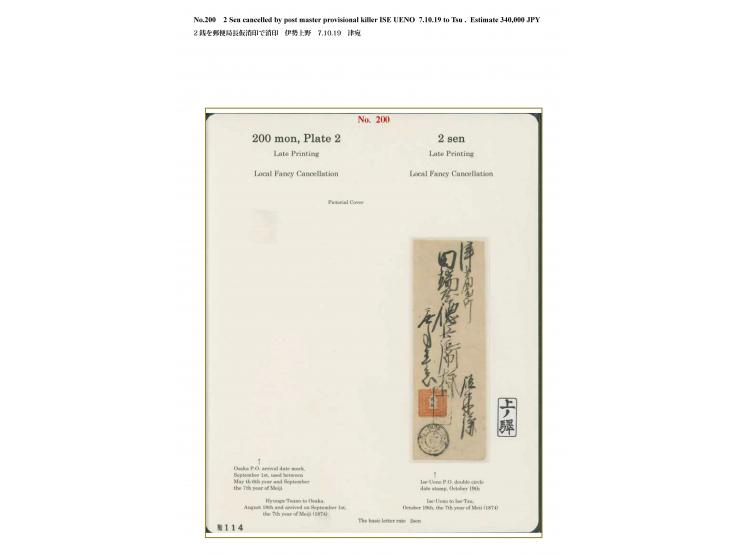
1872, 2 sen vermilion, late printing, tied by framed non-standard "Ueno station", with double-circle KG "Ueno. Ise 10.19" alongside, to Tsu, Ise Province.
Manuscript dateline "10th month 18th day" of Meiji 7.10.18 (18 October 1874).
A scarce and attractive provincial cover, notable for the rare Ueno station fancy cancellation.
Rate: Letter 2 sen nationwide, unified tariff from Meiji 6.4.1.
Reference: Illustrated in Dragon Covers, p. 114.


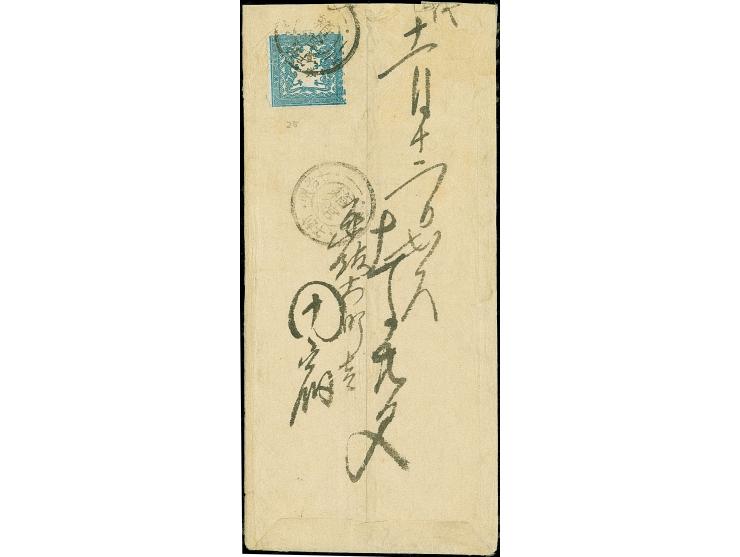
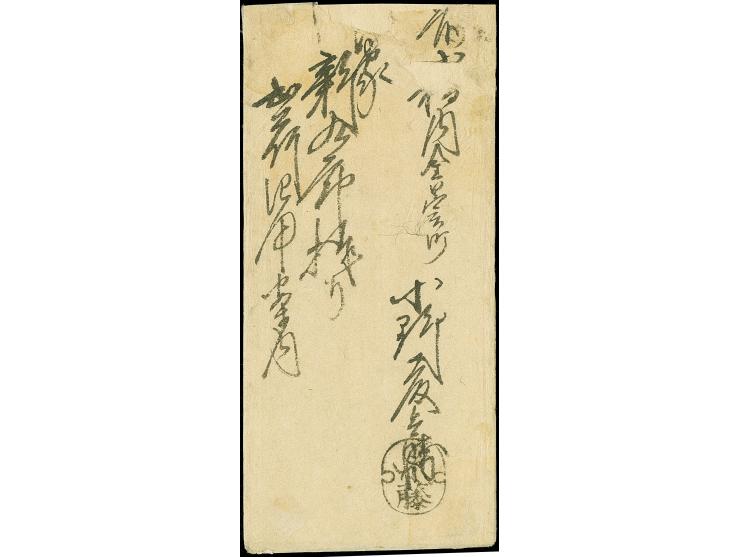
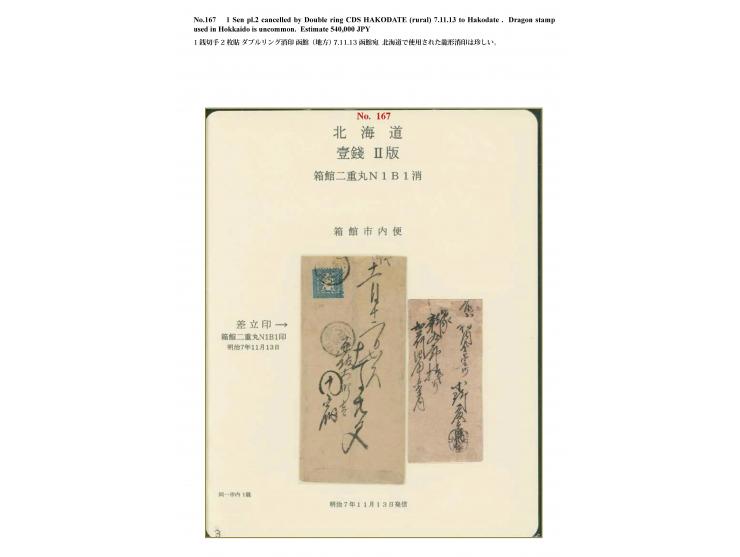
1872, 1 sen blue, plate II, position 25, tied by double-circle N1B1 "Hakodate Meiji 7.11.13" (13 November 1874) to the reverse of a local cover, slightly reduced at top.
Dragon stamp usages on Hokkaido are scarce, and this represents a desirable local usage from Hakodate during the unified-rate period.
Rate: Within city district = 1 sen per 2 momme, unified rate from Meiji 6.4.1 onward.
Reference: Illustrated in Dragon Covers, p. 115.